Why Your Brain Sabotages Your Return to Riding
Before we get into the tools, I should preface this with: I am an athlete, not a licensed psychologist or a neuroscientist. What I am sharing here is the science and the sports psychology strategies that have personally helped me and other riders pull ourselves out of the post crash mental trenches.
You are sitting on the couch, and suddenly your brain is replaying every terrible scenario. You see the crashes online, you hear the dismissive comments from people who do not understand the gravity of the sport, and you feel the phantom echo of your own past injuries. It is a suffocating, heavy spiral that you feel in your chest. But then you gear up, drop into a trail, and all of it vanishes. You are strong, capable, and completely in control. The fear disappears the second your tires hit the dirt. If you have ever experienced this jarring split reality while recovering from an injury, you need to know right now that you are not crazy, you are not weak, and you are absolutely not alone.
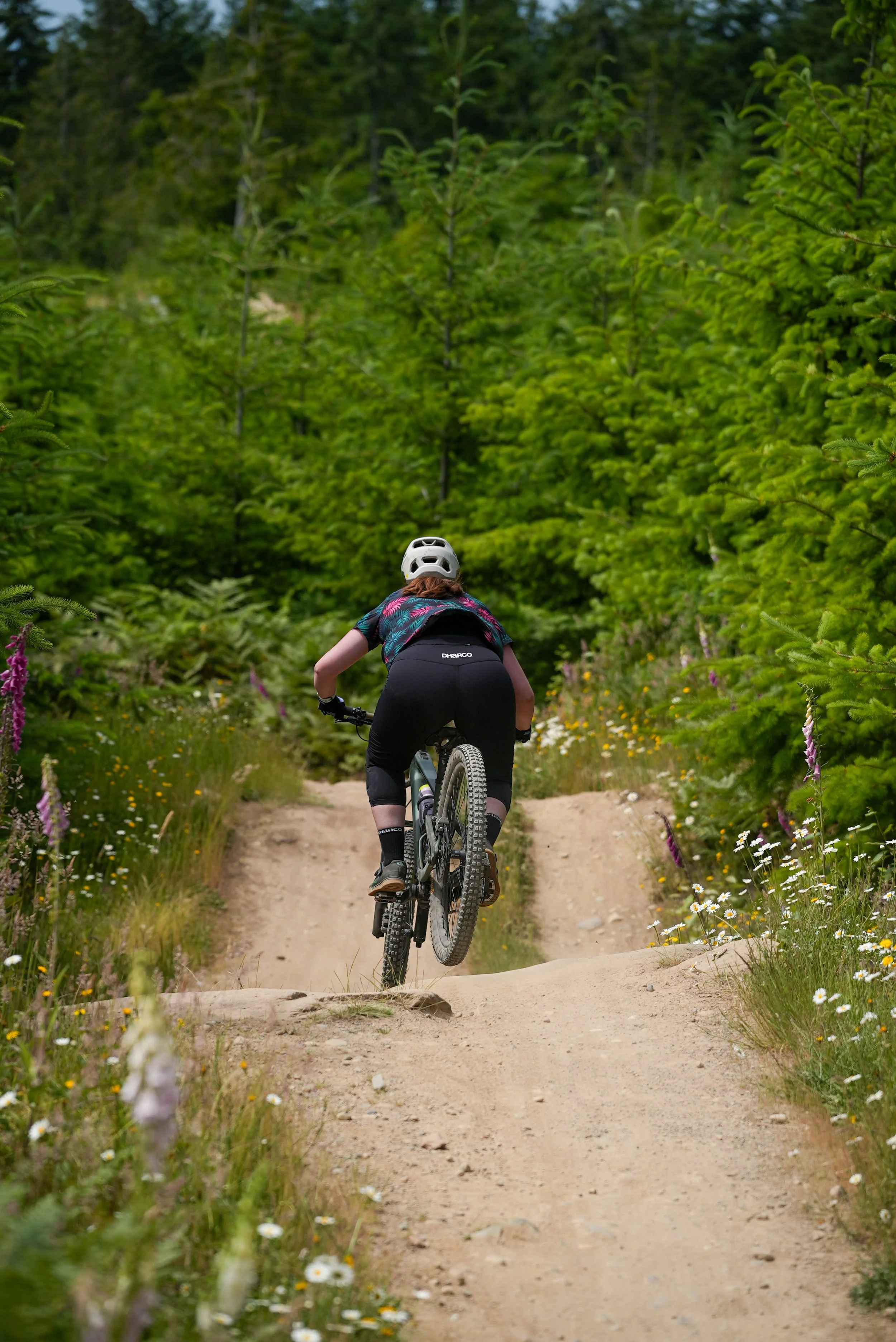
There is a scientific reason why you feel like two completely different people on and off the bike. It comes down to a neurological state called transient hypofrontality. When you are sitting in a boring, empty space, your prefrontal cortex is fully powered up. This is the part of your brain responsible for overthinking, ego, and projecting future fears. But the moment you start riding a technical trail, your brain needs all its processing power for balance, speed, and spatial awareness. So, I’ve learned it literally shuts down the prefrontal cortex. You are not just ignoring the fear while you ride; your brain physically turns off the ability to ruminate so you can execute complex movements. That is why the version of you on the bike feels so free and untouchable.
The brutal reality of recovery is what happens when the ride is over. When that prefrontal cortex powers back on, the rumination comes flooding back. And when you are deep in that dark place, basic advice like "just think positive" or "go check your bike bolts" feels insulting. Your brain is sounding a massive alarm, trying to protect you from ever feeling that physical pain again. To get past it, you need deeper tools to show your mind and your body that you are actually safe.
The first step is regulating your nervous system, because you cannot logic your way out of a physical panic response. When the fear loop starts playing while you are off the bike, your body reacts as if the crash is happening right now. Your heart rate spikes and your breathing gets shallow. You have to break the physical circuit first. Try the physiological sigh, which is taking two quick inhales through the nose followed by one long, slow exhale out the mouth. Do it three times. If the spiral is really intense, shock your system with temperature. Go hold an ice cube in your hand or splash freezing water on your face. It forces your brain to stop projecting into the scary future and immediately process the physical sensation happening in the present moment.
Once your body is calm, you have to change how you talk to the fear. We often try to fight the rumination, which just gives it more power. Instead of telling yourself to stop thinking about a crash, try a technique called cognitive defusion. You simply acknowledge the thought without claiming it as a truth. Say to yourself, "My brain is having the thought that I am going to get hurt again, and that makes sense because I went through something really hard. But right now, I am safe." It removes the shame of being afraid and gives you the grace to just let the thought exist without letting it control you.
Another massive hurdle is the pressure we put on ourselves to bounce back perfectly. When you finally get back on the bike, the gap between what your muscle memory knows you can do and what your healing body is ready for can be incredibly frustrating. This is where you have to implement micro exposures. You do not have to go hit a massive jump line to prove you are back. Sometimes a win is just putting your gear on and sitting at the trailhead. Sometimes a win is riding the easiest, flattest green trail for twenty minutes and going home. Take the pressure completely off. You are rebuilding a bridge of trust between your brain and your bike, and that bridge is built one tiny, uneventful ride at a time.
If you are reading this while nursing an injury or battling the mental demons of coming back to the sport, please give yourself grace. People love to say things like "bones heal," completely ignoring the fact that your nervous system takes much longer to recover than your skeleton does. It is okay if you feel scared. It is okay if you feel like you are starting over. You have not lost your skills, and you have not lost your courage. You are just in the messy, unglamorous part of the process. Keep showing up for yourself, use these tools to quiet the noise, and trust that the strong, capable version of you on the bike is still right there waiting for you.