How to Actually Train a Mountain Bike Trail Dog
Disclaimer: This post contains affiliate links. If you buy something through them, I may earn a commission (at no extra cost to you). These help keep this website alive. Thank you!
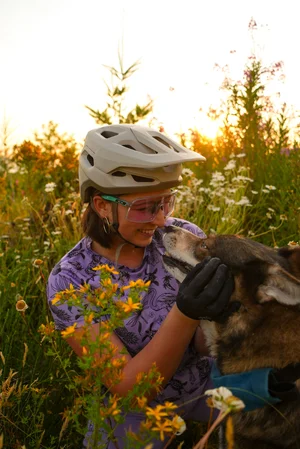
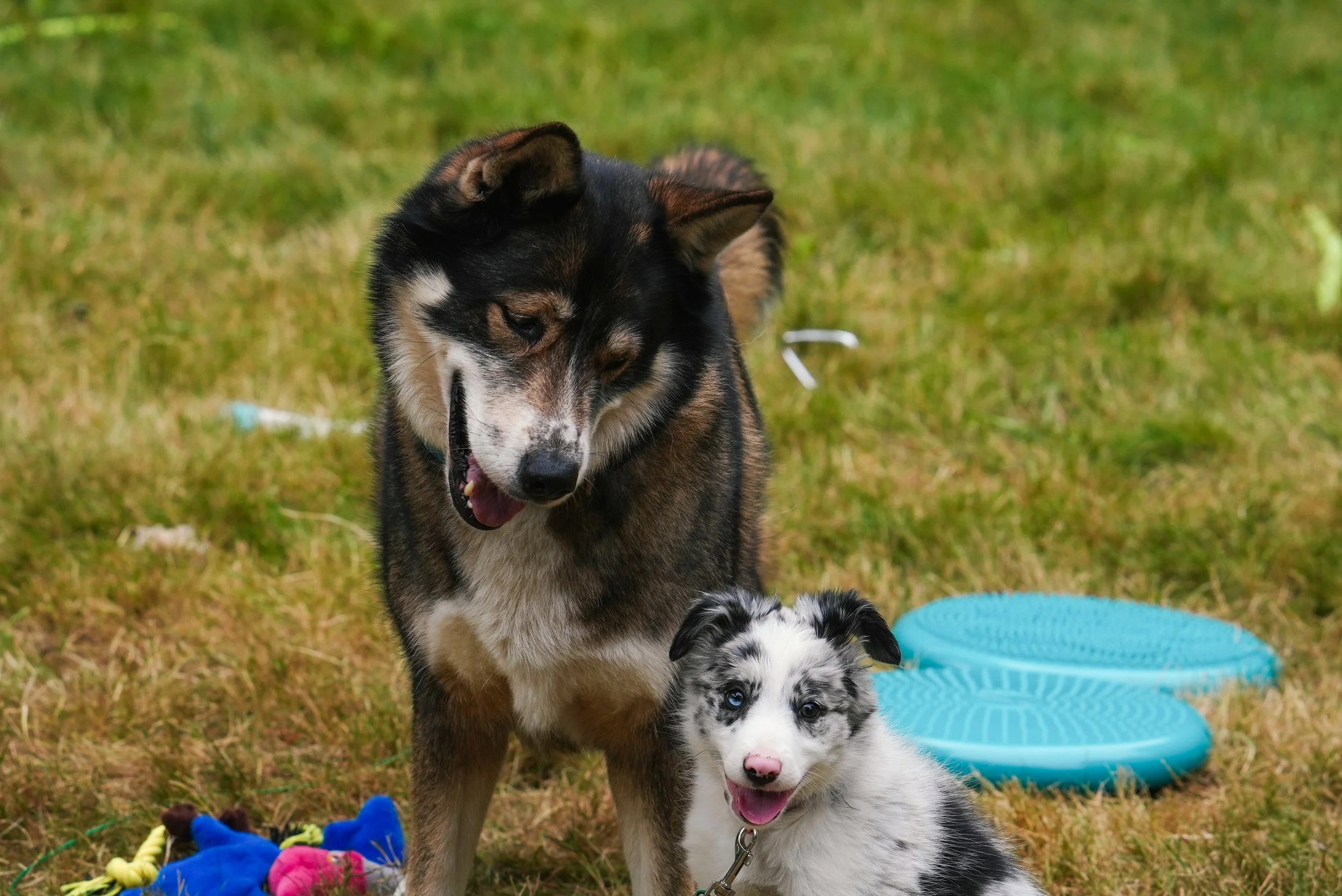
Training our border collie puppy, Pippi, has been one of my primary focuses since we adopted her. I specifically brought Pippi into the family because I knew a border collie could handle the heavy workload of being a training partner for those days when Spencer isn't able to ride with me. Having a trail dog is an incredible experience, but it comes with a massive amount of responsibility. When you bring a dog on a ride, it is no longer your bike ride. It’s theirs. You have to pay more attention to them than to your own riding. If you are thinking about bringing your dog out on the singletrack, here is the reality of how to train them, what to pack, and a few hard truths about trail etiquette.
Making Bikes Normal (But Respected)
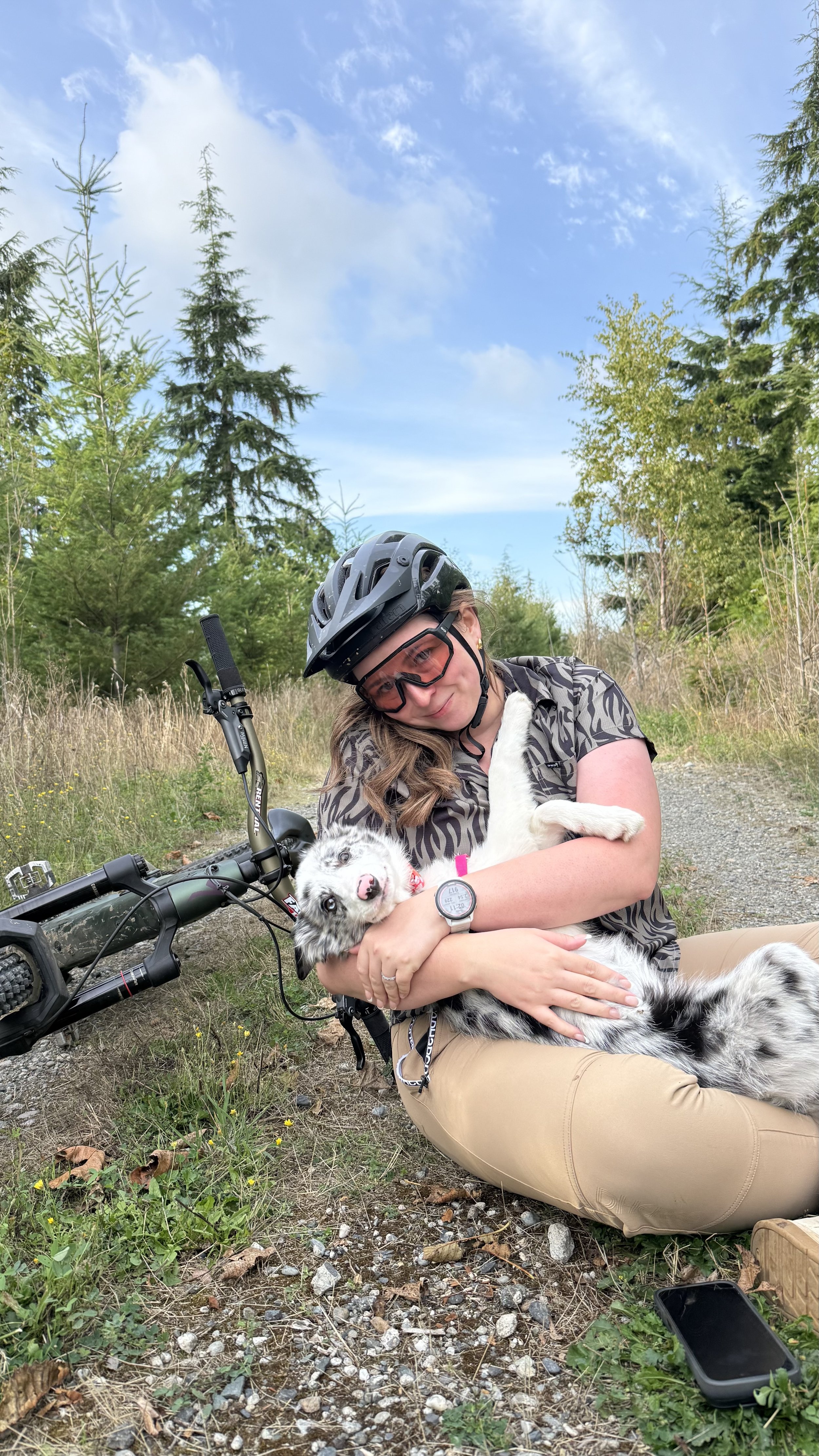
Bikes are huge, unnatural machines, and dogs will not automatically feel safe around them. Your first goal is constant, positive exposure. When we first got Pippi, we spent months simply walking and cycling around her while offering treats, making the bike a highly rewarding presence in her life. The easiest way to do this is with an easy grab dog treat bag clipped to you or your handlebars so you can quickly reward them on the move.
However, once a dog becomes comfortable, they need to learn that bikes are heavy, dangerous objects. Similar to how herding dogs learn pressure when moving sheep, your dog needs spatial awareness training. When I am walking the bike, I intentionally claim my space. If they cut too close, I don't move out of their way. I use my body and the bike to gently apply pressure so they step back. They need a healthy, cautious fear of the bike so they do not accidentally get a tail caught in a rotor or dive under a tire.
Trail Positioning and the Oreo Sandwich
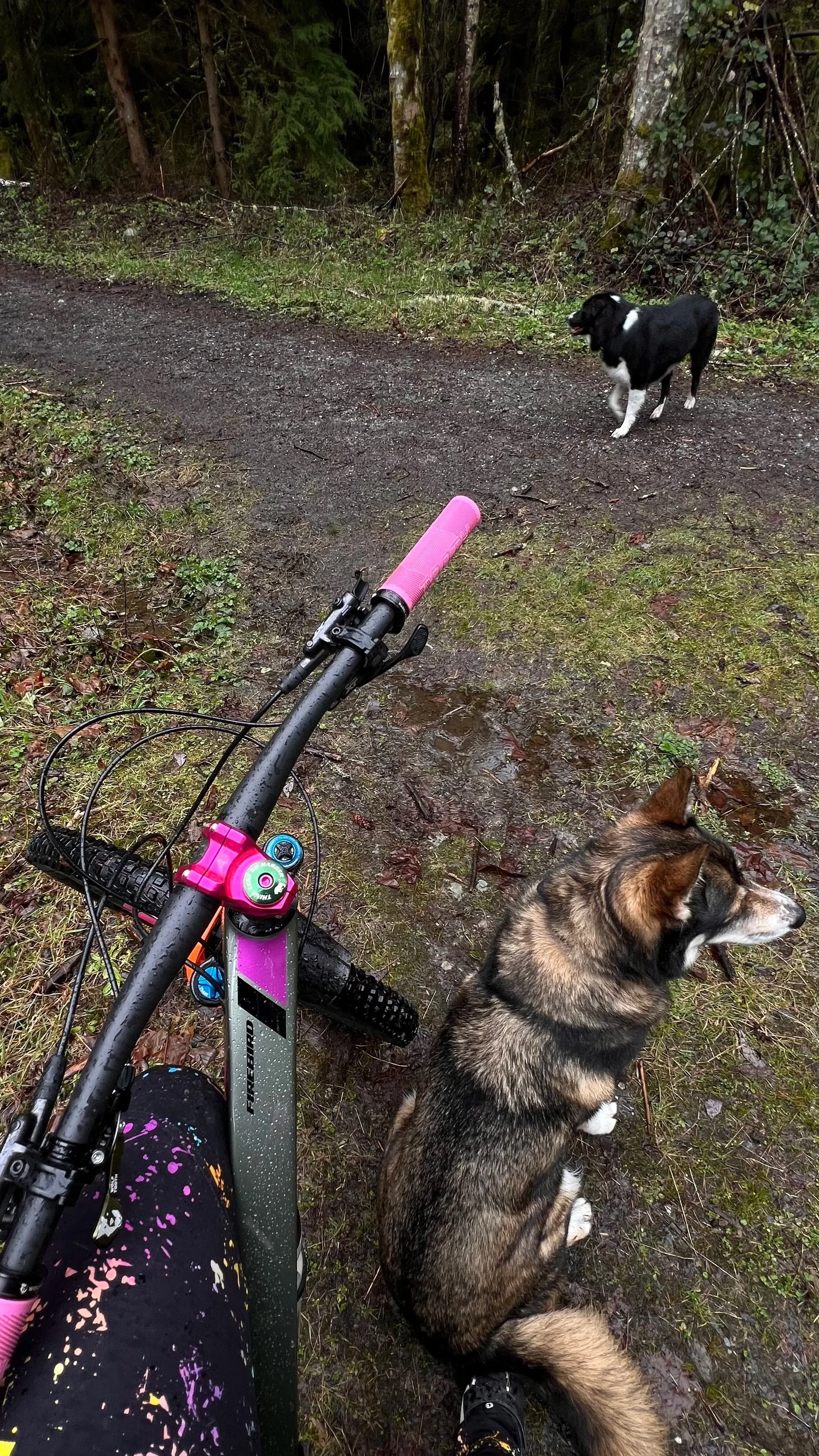
Unless I am specifically sessioning an XC trail to get video clips, I never allow my dogs to run in front of my front tire. It creates absolute chaos and is incredibly dangerous. Ideally, your dog should be trained to stay safely behind your rear tire at all times. If you are riding in a group and do not have a cowbell on your dog, you can use a fallback formation I call the Oreo Sandwich. This puts one human in front to enjoy the ride, the dog in the middle, and another human in the back who is hyper aware of the dog's movements. It isn't the recommended setup, but if it has to happen, it works.
When your dog is running safely behind you, attaching a cowbell to their harness is an absolute nonnegotiable for the descents. You do not necessarily need it for the climbs, but when you point the bike downhill, you have to know they are back there. Since you don't have eyes in the back of your head, a cowbell acts as your auditory rearview mirror. As long as you hear it ringing, you know they are safely maintaining pace. The exact second that bell goes silent, you know they've stopped following, allowing you to hit the brakes immediately.
You might get extremely lucky. We used to watch a dog that would bark every time we called his name, and Pippi currently barks out of pure excitement, so we usually know where she is. She is a little too sensitive for the cowbell right now, which is fine because we aren't taking her on real trails yet. But the second she graduates to actual singletrack, she will be wearing one.
When I first moved to Bellingham, I lost my older dog, Emma, on the U Line trail. The sound of my voice echoed, and she couldn't tell where I was calling from. A cowbell prevents this entirely. It also serves as a vital warning to others. In California, riders frequently use cowbells because the trails are multiuse, and the sound triggers a natural instinct for people to slow down. Whether someone is riding up fast behind you and your dog, or you are passing someone on a climbing trail, the cowbell gives everyone spatial awareness. It simply lets people know they are not alone in the woods. Additionally, you should always have a standard leash in your pack and have your dog wearing an easy grab harness for immediate control at busy intersections. Unless you use something like a quick grab leash, which is a fantastic option if you know your dog will stay right by your side. It makes other riders feel much more comfortable because it shows you have a leash ready without you actually having to hold one the entire time. It gives you peace of mind and puts other trail users at ease.
Conditioning and Knowing Your Breed
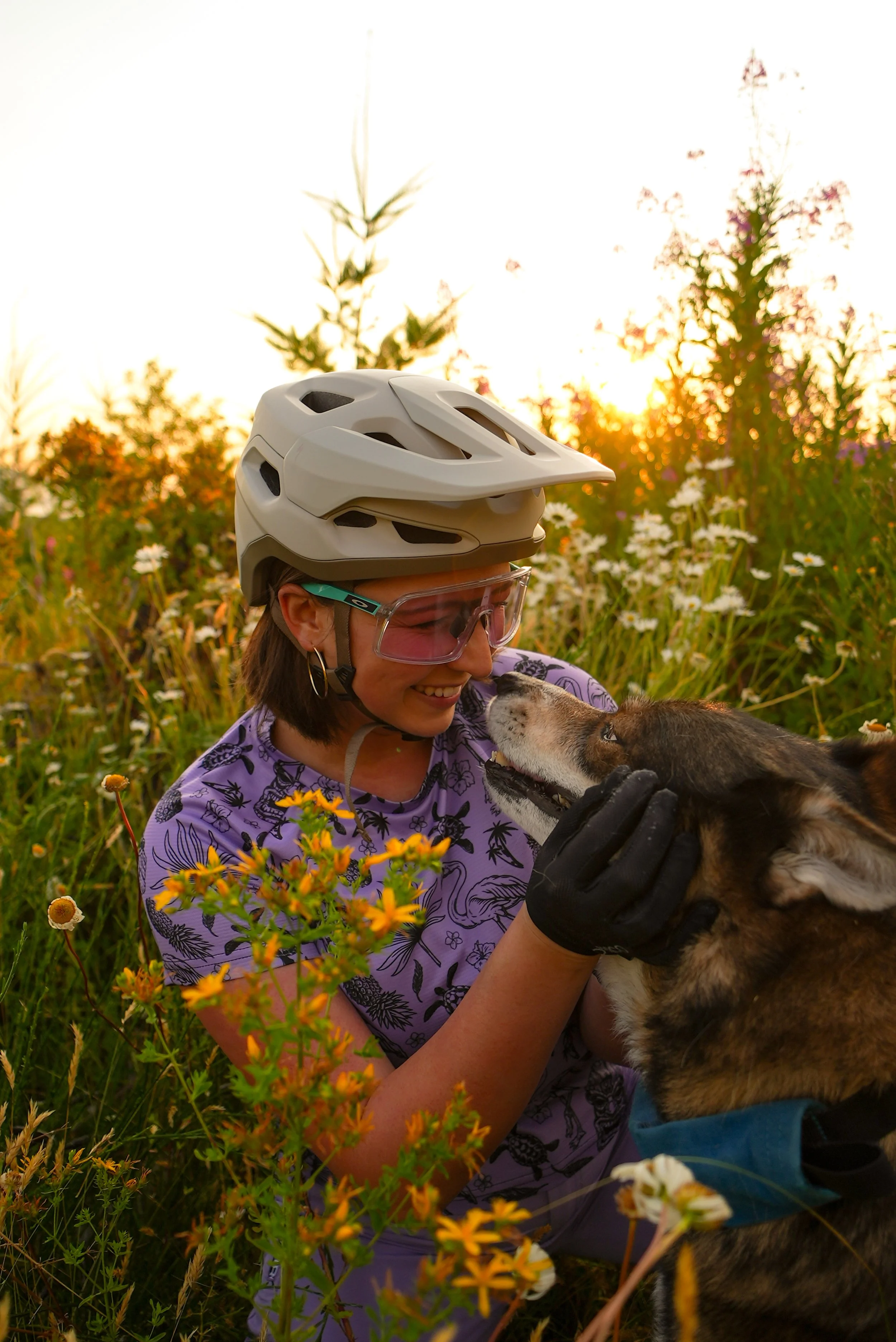
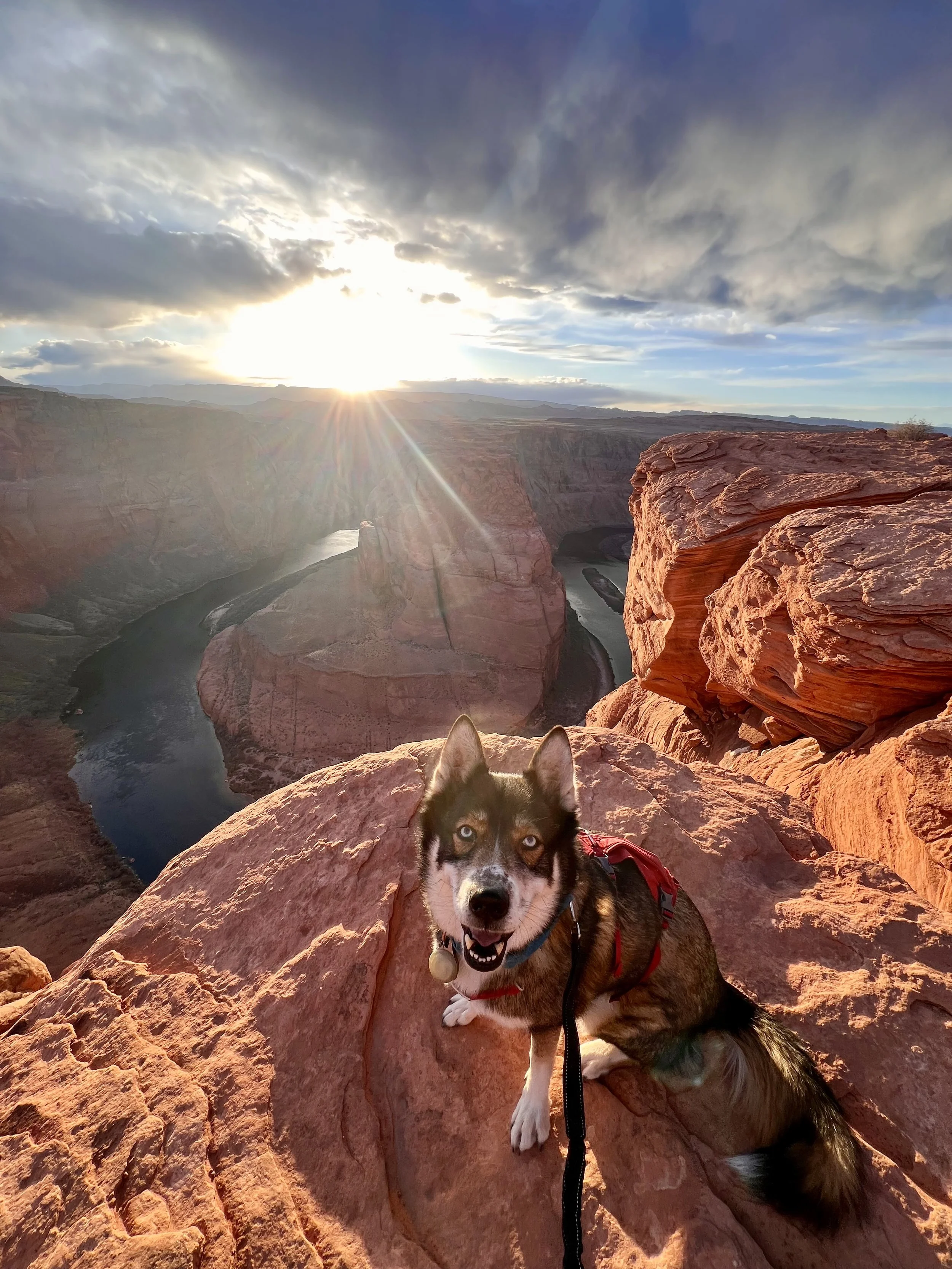
You cannot run a marathon without training, and you cannot expect your dog to run a full trail network without conditioning. You have to know your dog's physiological limits. Emma is a husky and German shepherd mix who used to run easily for three hours, but at nine years old, she taps out at about one hour now. Pippi, on the other hand, was bred for all day work. With proper fuel and water, she can easily go for hours. In fact, on a normal bike, the climbs are the most boring thing in the world for her.
Do not underestimate the family dogs, either. Golden Retrievers and Labrador Retrievers are sporting breeds built for hours of retrieving; with proper training, they make incredible, high stamina trail dogs. Conversely, bringing a toy breed like a Chihuahua means your ride is going to potentially be capped at a thirty minute maximum. Train them according to their build.
Fuel, Hydration, and Gear
Your dog needs trail snacks and hydration just as much as you do. It isn't always puddle season! Emma will happily drink straight from my water bottle, but Pippi recently developed an irrational fear that the water bottle is out to get her. Because of this, I always carry a tiny, collapsible silicone bowl in my pack so she can drink comfortably.
If you have a high energy dog pulling long miles, you need to decide who is carrying the supplies. If you want them to carry their own weight, I highly recommend investing in backpacks with storage (or this alternative storage pack) where you can easily tuck a water and food pouch right into their harness so they are completely self sufficient.
If you prefer to carry their snacks for them, keeping them in a standard easy grab harness works perfectly. And for a totally different approach, if you want to turn those boring climbs into a shuttle, you can get a specific dog pulling harness and actually train them to pull you up the hill!
The Hard Truths of Trail Etiquette
Not every dog is meant to be a trail dog. If your dog has spotty recall, gets distracted easily, or is reactive to other riders, they should not be on a busy mountain bike trail. I have personally crashed on a rock roll to avoid a loose dog that stopped dead in the middle of a black diamond trail. It is an awful situation for everyone involved, and you are entirely responsible for ensuring your dog is not a hazard.
And finally, my biggest peeve: The Poop Bags. If you are going to bag your dog's poop, you must carry it out. You can tie it to their harness or put it in a dedicated pocket in your pack, but do not leave it on the side of the trail. Just because a bag says biodegradable does not mean it disappears in a month. As an avid composter, I can tell you firsthand that those bags take years to break down.
If you absolutely refuse to carry the bag out with you, do not use one at all. It is vastly better for the environment to take a stick and flick the waste far off the trail into the bushes than it is to leave a plastic bag sitting in the dirt for half a decade. We carry the weight of knowing our dogs could get banned from these trail networks. Be the leading example so that doesn't happen.