How to Escape the Mountain Bike Gear Trap
If you spend more than 5 minutes on a mountain bike forum, you will walk away convinced that your current setup is a hazard to your health and that you need to spend $3,000 immediately just to safely ride a green or blue trail. The mountain bike industry is incredible at innovating, but it is equally as incredible at convincing us that every upgrade is an absolute necessity. When I first started taking my riding seriously, I bought into a lot of the hype. Over the years, and after logging thousands of hours on the trails, I’ve ruthlessly audited my kit. Here is a breakdown of what the industry told me I needed, what my data actually supports, and what I actually take with me when I roll out.
Let's start with the things I ditched. When I first got into the sport, I was told Five Tens were the absolute only option for flat pedals. Don't get me wrong, they are fantastic, and you definitely should use a bike specific shoe over regular sneakers, because a stiff sole transfers power and protects your foot. But believing you have to buy one specific brand is just buying into clever marketing and an old echo chamber. There are dozens of great shoe brands out there now.
The same goes for expensive riding glasses. You could easily use a cheap pair of safety glasses from Home Depot, which does the exact same job of keeping mud and branches out of your eyes. The expensive, bike specific glasses that pop up first in your online searches are fun to own, but if you want a step up from safety glasses without breaking the bank, I personally choose smaller, more local brands like Coast Optics. I’d much rather support an up and coming brand than drop top dollar on the big name options.
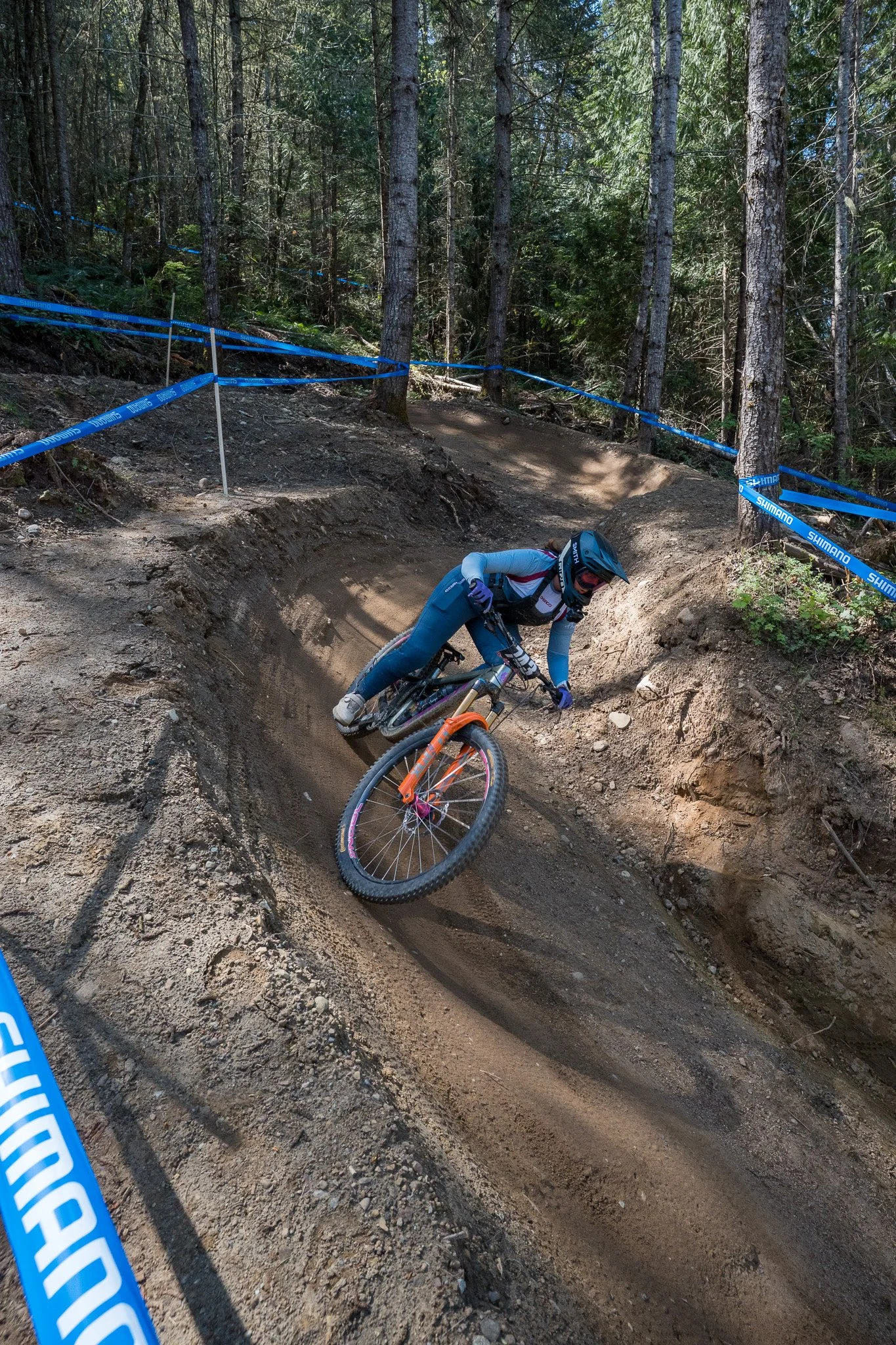
I am also pretty selective when it comes to body protection, and organizing it by what you actually need for the trail versus the bike park makes a huge difference. Let's start with the trail. Knee pads are a total non negotiable unless you are strictly riding XC. Pedaling with knee pads can be uncomfortable on long rides, so my trick is to wear shorts, keep the knee pads pushed down around your shins or calves on the climbs, and then pull them up into place right before you drop into the descent. If you are wearing riding pants and do not have the ability to slide your knee pads off your joints, chafing becomes the real enemy. Taking a stick of Body Glide or even regular deodorant and rubbing it right where the pads touch your skin will completely save you. Oh, and cut the tags off your armor. It sounds incredibly basic, but taking five seconds to snip off those scratchy tags will minimize so much irritation on a long pedal.
But when you transition to a bike park or shuttle day, your body armor needs change completely. That is when I bring out the elbow pads and a chest protector. You are hitting much higher speeds, and you want as much protection as possible. You won't catch me wearing elbow pads on a standard trail ride because they are almost always uncomfortable, but at the park, they are essential.
That exact same logic applies to your helmet. A lightweight full face helmet is designed for trail riding or Enduro racing because it breathes better, but you are not going bike park speeds. When you are riding lifts and hitting park speeds, you do not want a light helmet; you want a downhill specific full face helmet for maximum protection. Once you put on that full face helmet, the rule about cheap safety glasses completely changes. For full face days, I will only wear proper goggles. If you take a hard crash wearing regular safety glasses inside a full face, those rigid plastic frames do not have the foam padding to absorb the impact and can get shoved directly into your face, potentially causing more damage. Stick to solid feeling goggles for the full face.
Fueling is another area where I ignore the hype. The cycling industry wants you to believe you can only survive on perfectly engineered snack bars. It’s a trap. Your body just needs simple, easy to digest carbohydrates and sodium. If you are riding for more than two hours, you want to eat around every 45 minutes. You generally want a certain amount of carbs and sugar per hour of riding time to keep your energy up, but what you are actually able to consume depends heavily on gut training. We will dive deeper into gut training in another chapter, and it will be talked about extensively in my cookbook, Cooking Up Loam. My god tier snacks are Cheez Its, a cookie, or savory rice bites. Cheez Its and a cookie give you pure, fast digesting carbs baked with salt for rapid energy, replacing sweat loss, and curing flavor fatigue. If you want a homemade option, those savory rice bites made from sticky rice, a little soy sauce, and bacon bits give you incredible real food fuel without the sugar crash. Giving you easy, real food trail alternatives like this is exactly why I'm working on Cooking Up Loam right now!
There are also a few setup details that feel like no-brainers to me now, but are easy to overlook when you're starting out. For instance, running a front fender or mudguard is an absolute must. Even if you don't live in a notoriously muddy area, having that simple piece of plastic prevents rocks and trail debris from flinging directly into your face, frame, or fork stanchions. You don't need anything high end or carbon; just grab the most basic one your local bike shop has, and keep your ears open for what debris it saves you from.
Speaking of setup, I always carry a digital tire gauge. On normal trail weeks, you can usually go a couple of rides before needing to top off your tires, assuming you don't have a slow leak. Your suspension should be checked at least monthly. But when I'm lining up for a race, I am checking both tire and suspension pressures the night before and the morning of. It's not just about optimizing the bike; it's about total peace of mind. People love to play mind games at the start line, and knowing my numbers are completely dialed means no one can get in my head or make me second guess my rig.
Then there are the unglamorous workhorses where your comfort actually lives. It took me years to figure out that just because a saddle is labeled "women specific" doesn't mean it will work for you. The foam on female specific seats actually created hotspots and pressure for me. I finally switched to a seat with a center cutout to relieve soft tissue pressure, and it changed everything. Pair that with a good chamois and some DZ Nuts chamois butter, which has a slight numbing effect that is incredible for long days. Chamois might be going out of fashion with the cool crowd, but who's laughing on hour seven of a ride?
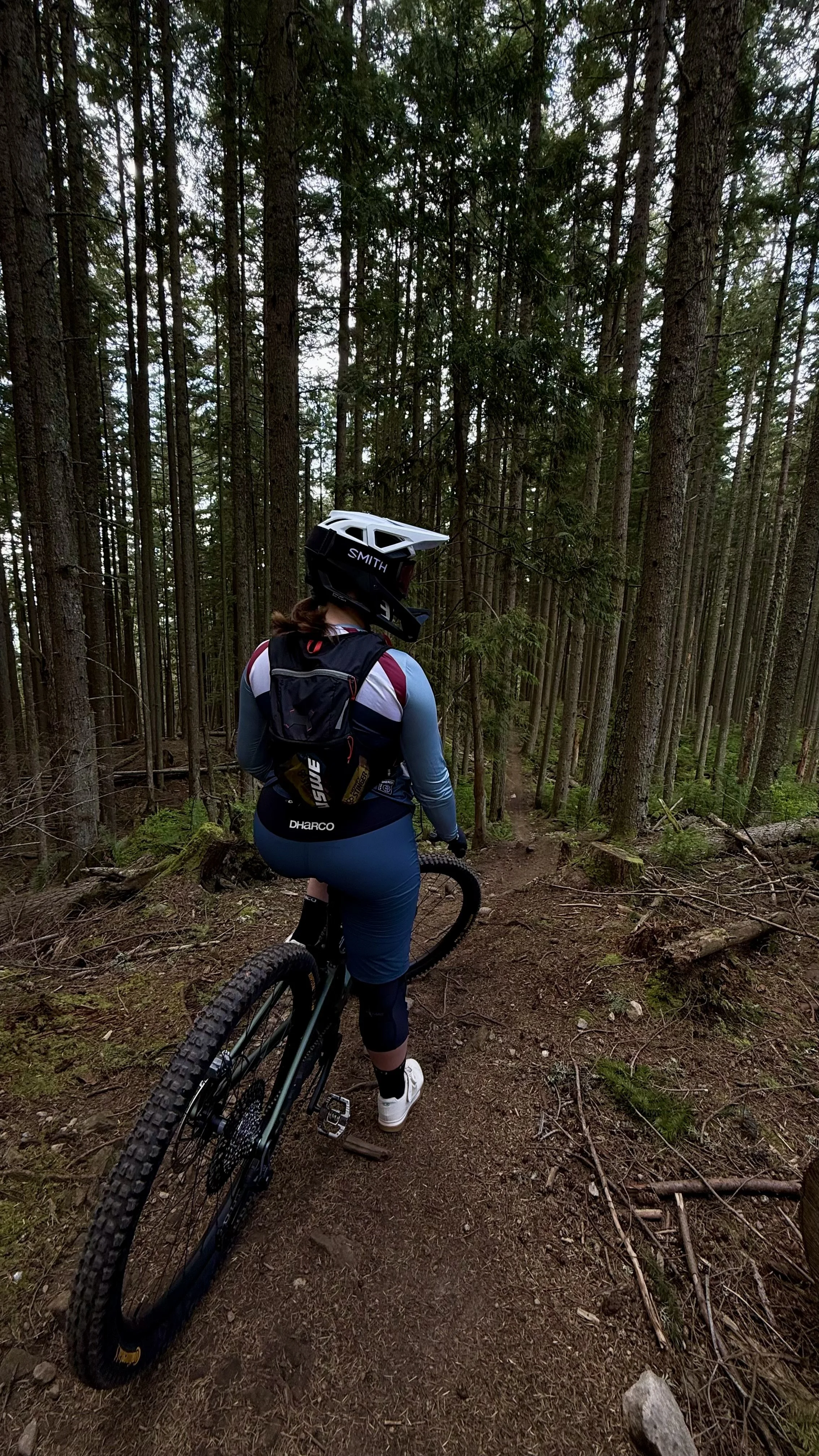
For hydration, a clean pack is vital because dehydration will hit you like a ton of bricks out of nowhere. If I'm out for more than a couple of hours, I bring my USWE hydration pack since it breathes incredibly well and doesn't bounce. Just don't put sticky electrolyte mix in the bladder unless you want to accidentally grow a mold farm. Keep the electrolytes in a frame bottle and pure water in the pack. I do, however, stash backup electrolyte tablets in my pack just in case that frame bottle runs dry, along with a few emergency salt tablets. If it's a scorching day and you feel a cramp creeping in, those salt tabs are an absolute lifesaver. Since we're talking about what lives in the pack on those epic days, I have actually put together a full pack checklist at the very bottom of this post for you to reference. But beyond the tools, I also always carry a travel sized sunscreen and an SPF Chapstick. When you are out there long enough, you will definitely need to reapply, and burnt lips will absolutely ruin your post ride vibe. And to keep the heavy metal out of my bag, I love having a multitool on my bike. My Specialized Kenevo ebike has a SWAT Conceal Carry tool hidden right inside the headset, which keeps it from getting rusted out in a sweaty backpack.
There are a few areas where splurging is absolutely justified. "Any helmet is fine as long as it fits" is a myth that ignores the biomechanics of crashing. Many MTB crashes cause rotational motion in the brain, which leads to concussions. I only buy helmets equipped with MIPS or similar tech, and I buy them based on the independent safety testing from the Virginia Tech Helmet Ratings list, where the Fox Speedframe Pro and some Specialized helmets always score high. If you crash and ding your helmet, it’s done. You only get one brain. Another justified splurge is a fitness monitor. Whether it's a Wahoo, a Garmin computer, or the Garmin watch I use now, tracking your metrics is key if you want to progress. It taught me exactly what heart rate I can sustain for one hour versus three.
Now, a computer or watch gives you plenty of data on its own, so going further is not a strict necessity. But if you have the extra cash and want to go above and beyond, you can look into power sensors. This area gets a little funky for mountain biking. You can get power meter pedals, which are quite nice for road biking, XC, or indoor trainer rides, but they are very expensive and not always ideal for trail riding where rock strikes are a constant threat. You can also add separate sensors to your bike, though they can sometimes get knocked off in rough terrain. If you pair a heart rate monitor, which feeds into your ecosystem to estimate things like sweat loss and calorie burn, with a power sensor, you truly understand what you are doing on the bike. Certain laid back riders might completely disagree and make fun of you because they hate the look of them, but if you have the budget, I say go for it. If you do not, the standard computer estimates are still incredibly close, sometimes leaving only a marginal error in the numbers. Ultimately, having all that real time data on your body is like being an on the bike Tamagotchi.
Finally, the non negotiable first aid kit. Before my most recent injury, Spencer participated in a mountain bike first aid clinic. They told him exactly what to carry: a SAM splint, a triangular bandage for a sling, and Aspirin. We knew this, but we didn't pack them. Fast forward to October, I broke my humerus on the trail, and we had nothing. I had to use a spare tube as a makeshift sling while physically holding my own arm together until we got home. The second we walked through the door, Spencer made a proper DIY sling out of a shirt that every nurse and doctor at the hospital complimented. The tube was better than nothing, but it was miserable. Those specific first aid items now live permanently in my pack. It’s extra weight, but I promise you, it is worth it.
The best gear is the gear you don't notice while you're riding. If you are suffering from saddle pain, bonking from a lack of snacks, or terrified of destroying an expensive pair of glasses, your gear is working against you. Dial in your safety, pack the Cheez Its, and leave the extra baggage behind.
The Ultimate Trail Pack Checklist
Hydration pack with pure water (unless you wish to potentially stain and grow mold in your water bladder)
Water bottle with electrolyte mix for the bike
Backup electrolyte and salt tablets
Real food snacks like Cheez Its, a cookie, or savory rice bites
Digital tire gauge
Multitool with chain breaker
Tire levers, spare tube, and mini pump or CO2
Travel sized sunscreen and SPF Chapstick
First aid essentials: SAM splint, triangular bandage, gauze, and Aspirin