The Start Line Sickness: What MTB Racing Is Like
The Start Line Sickness: What MTB Racing Is Like
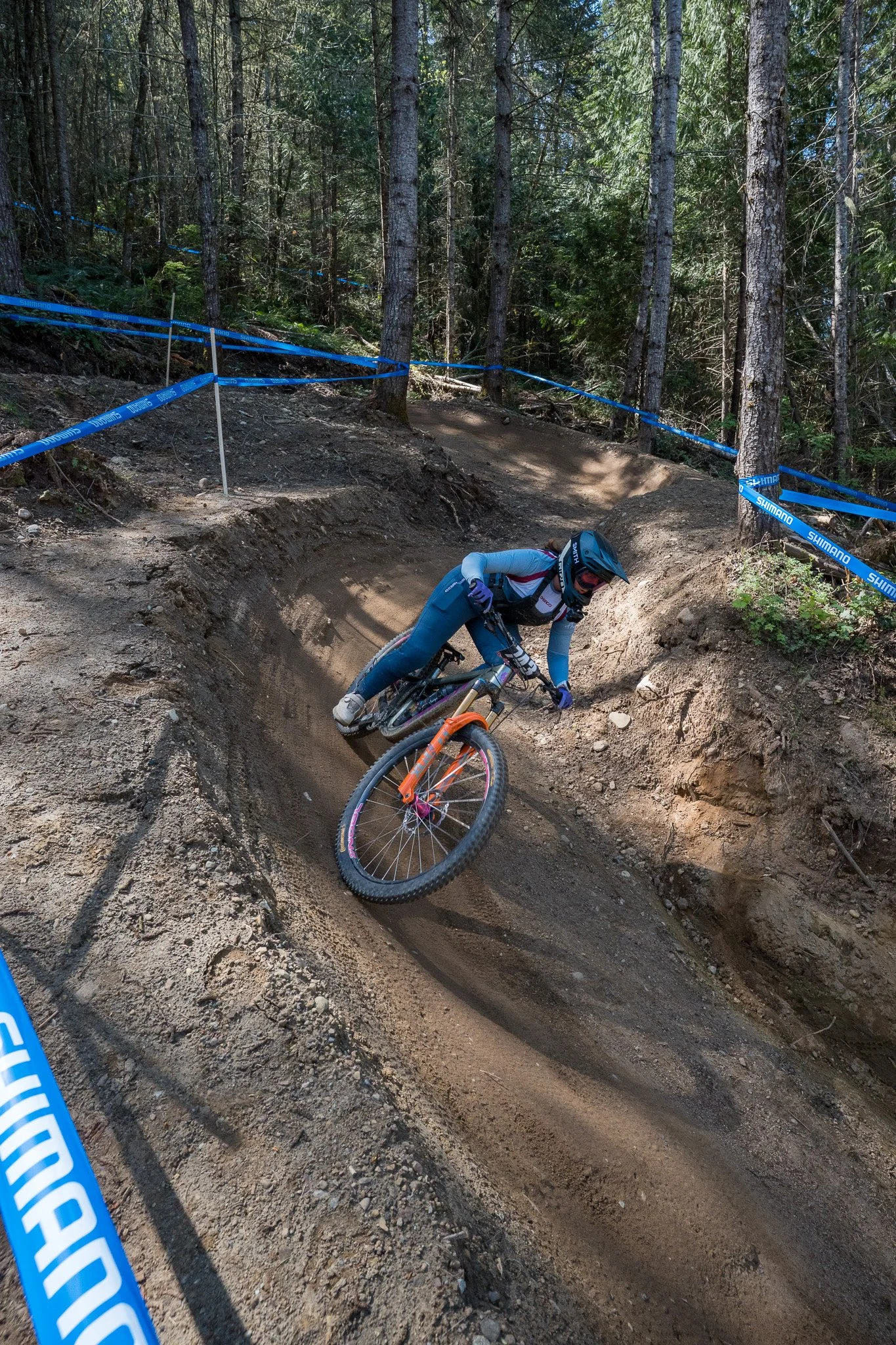
The Reality of You Versus You You have done the work, you have signed up for the race, and you have probably spent hours watching GoPro footage of the course. But if you try to search for what racing actually feels like, you won’t find much. I’ve won races, I’ve lost races, and I have finished mid pack. If there is one certainty I can give you, it is this: a race result is not a reflection of your worth as a rider.
At the end of the day, when you are in that start gate, it is you versus yourself. If you want to spike your anxiety, focus on what everyone else is doing. If you want to ride well, you have to realize you are only competing against your own best time.
The Myth of Home Field Advantage People talk a lot about the home field advantage, but the reality is that it is only an advantage if you decide it is. A lot of what happens to us mentally on the track is a direct reflection of what we tell ourselves. If you show up to a race and immediately decide you are at a disadvantage because the locals ride there every day, that belief alone will negatively affect your performance.
But here is the secret about knowing a trail too well: it can actually become a massive psychological trap. When it is your home mountain, you know exactly which roots are slick, you know what catches people off guard, and you can easily overthink a feature. Because locals know exactly where things can go wrong, they might ride cautiously through sections that an out of town rider will just blindly blaze right through with total confidence.
If you are racing on your home turf, let that familiarity feel like a massive win. Use it to boost your confidence. But if you are the visitor, do not let it feel like a loss. Reframe the narrative. You have the gift of riding without the baggage of knowing every single consequence. Do not get stuck on who rides there the most. Psychologically, you have to believe exactly what you need to believe to feel strong in that moment about that space.
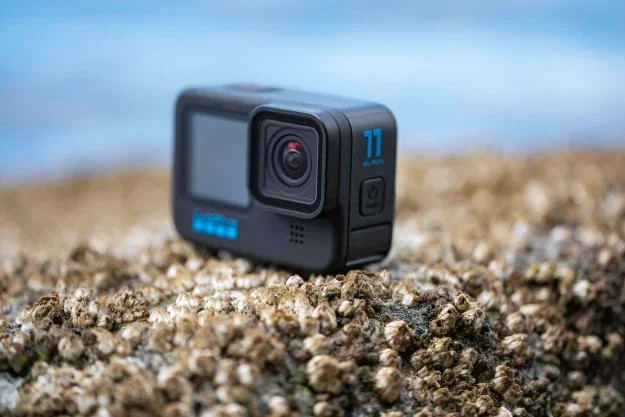
Mental Laps and The Use of the Action Camera When you cannot physically ride the track because Enduro practice is limited or you are preserving your physical energy, recording your practice lap is vital. I would not be surprised if we start seeing Oakley glasses with built in cameras used more for this exact discreet reconnaissance.
Sports psychology research shows that motor imagery activates the exact same neural pathways in your brain as physically riding your bike. Studies have shown that athletes who combine physical practice with structured mental rehearsal improve their performance by up to 45 percent compared to physical practice alone. Watching your footage and visualizing your braking points is not just daydreaming; it is literally programming your central nervous system.
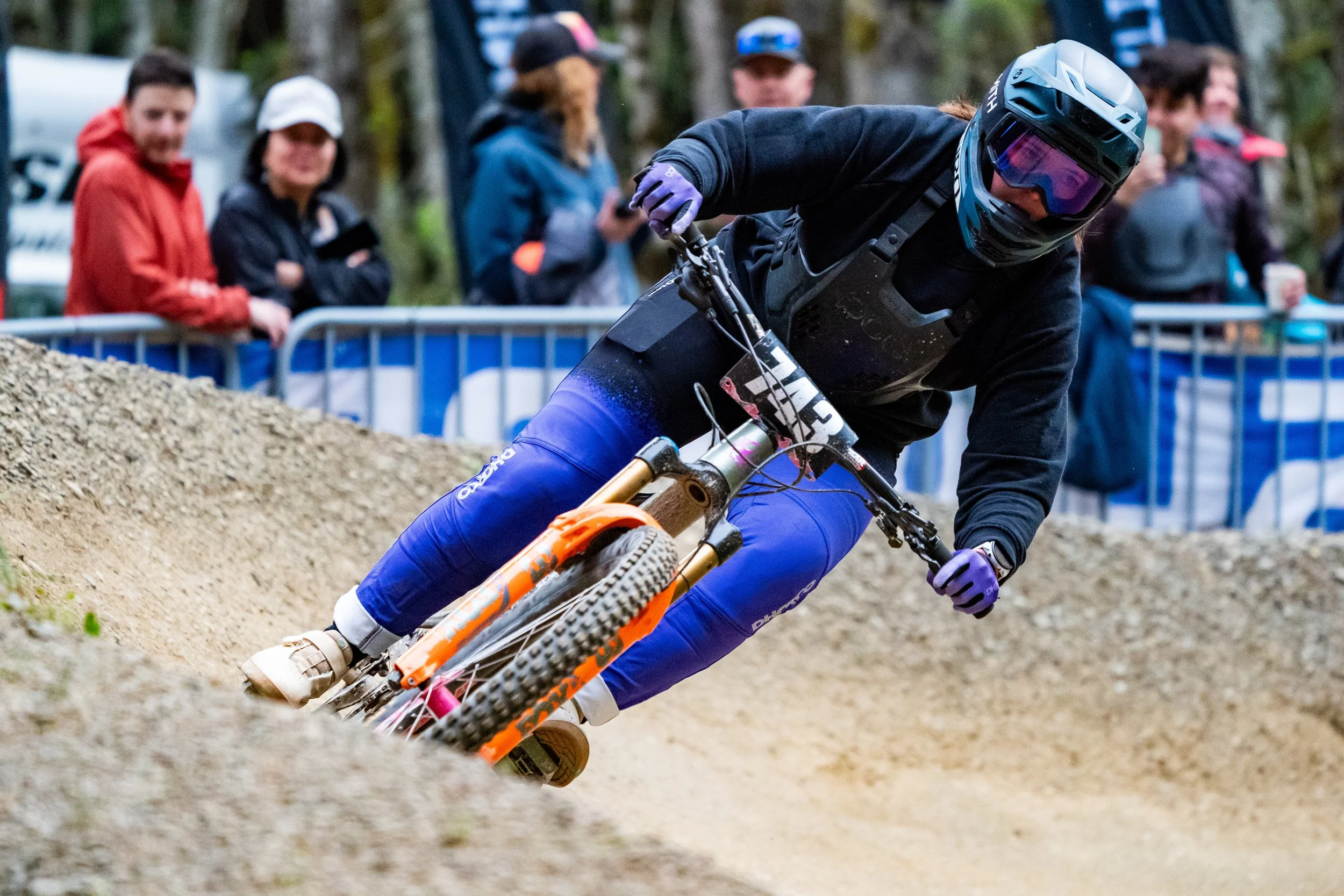
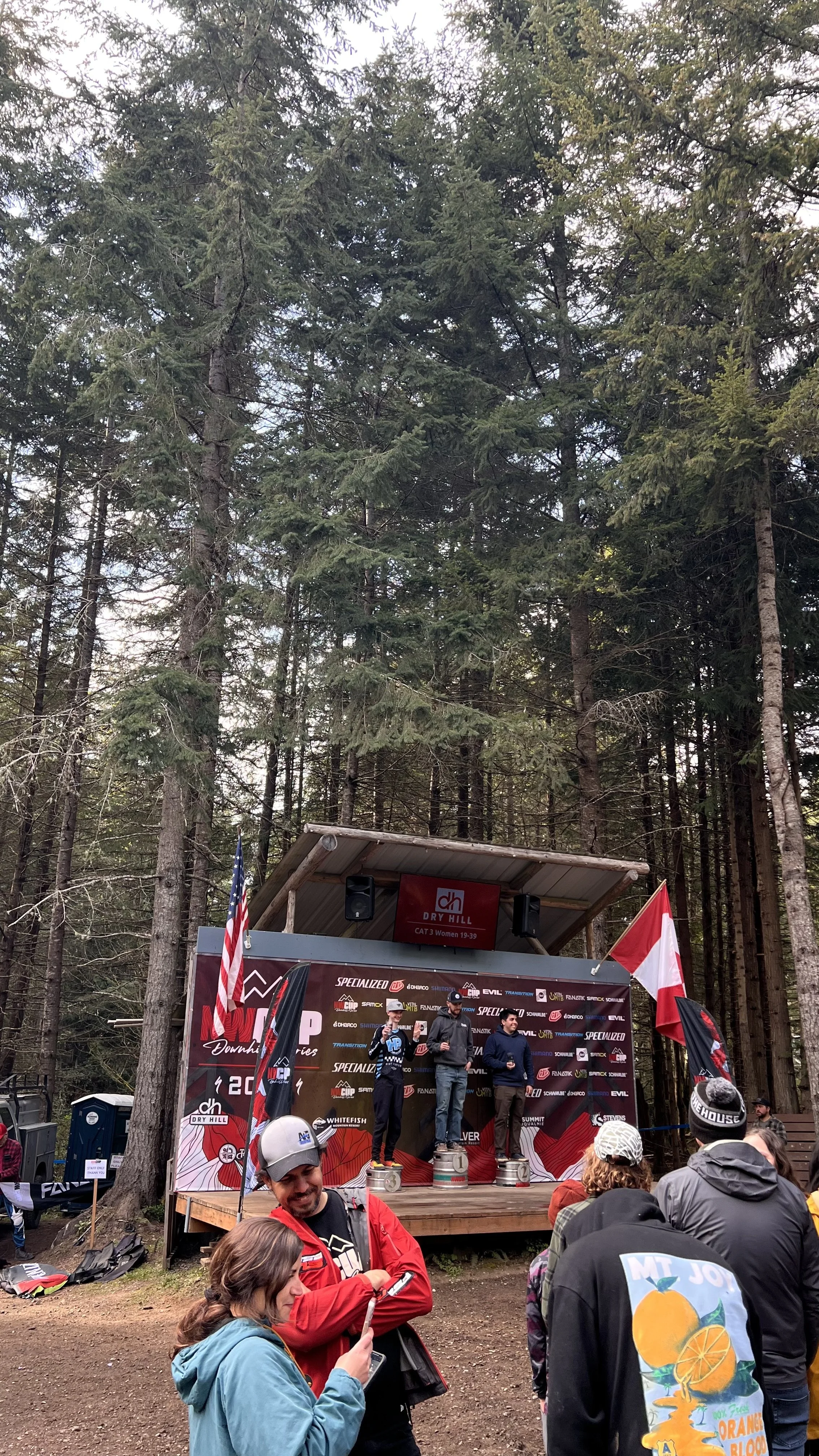
The Brutal Reality of Downhill Practice If you are a woman getting into Downhill racing, I am not going to sugarcoat this: your practice runs will likely be the most unnerving part of your weekend. At local races, women are almost always lumped into practice sessions with either young kids or men in their age bracket.
When I raced Cat 3, my practice runs meant dodging literal children on balance bikes who became unpredictable roadblocks on the trail. When I moved up to Cat 2, the demographic shifted to teenage boys. These are kids who have been riding since the balance bike era and know the course intimately, but they often lack basic trail etiquette.
Even if you are placed in a practice group with men your own age, it is still problematic. It does not matter how good you are or how fast you are going. Men and women simply approach trail features differently. I have had men almost land on me over jumps. I was not going slow, I was not doing anything wrong, and honestly, neither were they. They were just hitting a blind triple, and our pacing did not match.
I truly wish women had dedicated practice sessions. Until then, you have to accept that getting a smooth practice run is incredibly difficult. It is pure survival. Here is the most important thing you can remember: do not let a chaotic practice run dictate whether or not you race. During practice, you are fighting for space. Logistically, the actual race run is often the calmest part of the entire weekend. Psychologically, it is the absolute hardest.
I am not going to pretend it will feel easy. Your heart will be pounding, your nerves will be screaming, and you will be completely alone with your own thoughts. But the physical chaos of dodging other riders is over. For those few minutes, the track is finally all yours to ride.
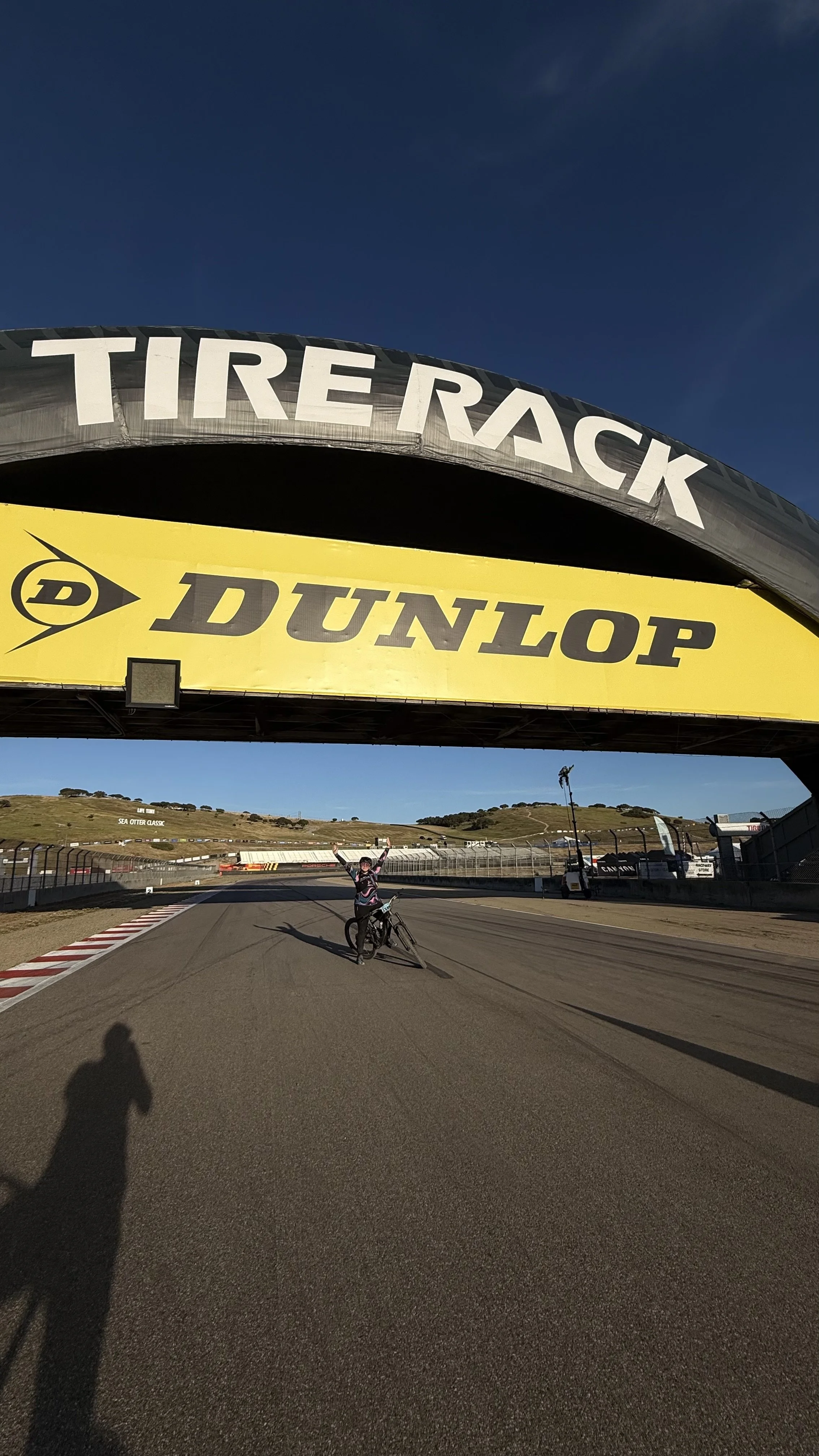
The Chaos of the Mass Start: Surviving the Pack
While Enduro and Downhill are ultimately solo battles against the clock, certain formats like e bike races or cross country events throw you into the chaotic reality of a mass start. This is a completely different psychological and physical beast.
At Sea Otter, I experienced a mass start for the E bike race, and it was entirely eye opening. You are lined up elbow to elbow with people who are suddenly not just your friends, but your immediate competition. The anxiety spikes differently here; you aren’t just worried about the track, you are worried about the rider three inches to your left.
But the real chaos happens when the categories mix. In our race, the women’s field (which wasn't even divided by age, just one open field) ended up mixed in with the men’s field. To add to the discrepancy, I was on a "superlight" e bike, which meant my "Turbo" setting felt like everyone else's "Eco". Naturally, I found myself being caught by the men's pack.
Here is the truth about mixed field racing: the top tier, incredibly fast riders know how to pass safely. They communicate, they say thank you, and they move efficiently. The danger comes from the mid pack riders.
During one section of super tight singletrack, I had a guy from the men's field riding my rear wheel incredibly aggressively. Now, to be fair to the format: I know that in mass start racing, getting close and tailgating is sometimes part of the game to make a pass. But if you choose to ride someone's bumper on tight singletrack, you are blinding yourself to the trail ahead. You have to be absolutely confident that the person in front of you knows exactly what they are doing, because if they go down, you are going down with them.
Think of it exactly like driving a car: if someone tailgates you and rear ends you, the person in the back is legally at fault. The same logic applies on the trail. If you make the active decision to tailgate someone and it goes wrong for you, you are at fault. You cannot get mad at the person in front of you.
Dare I say, this concept applies just as much to casual group rides as it does to racing. I hear far too frequently about women riding with their partners, only to have their partners buzz their rear tire, almost cause a crash, and then get mad at them for it. At the end of the day, giving space is always safer. You cannot control what the person behind you does; you can only focus on not losing control of your own bike.
There was zero room to pass safely on this specific section of the race, but I could feel him right on my tire. I eventually pulled over into a sandy section just to get him off my back. Because he was tailgating so blindly, when I went right to let him pass, he swerved left into the sand to avoid me. He didn't even crash, he just lost his footing, spiked his own shin with his pedal, and then stood there complaining about his leg and glaring at me before pedaling off.
It is a particularly bad decision to tailgate someone who isn’t even in your category or your race, and to be that aggressive about it. He was battling somewhere in the middle of the men's 40s or 50s field, and I was in the women's open field.
But the ultimate takeaway from this whole experience points to a much larger, systemic issue in mountain bike racing: if these events didn't have the men's and women's fields practically racing over the top of each other, this wouldn't be a problem. As I was getting lapped, I noticed other women dealing with the exact same thing, men right on their wheels, pressuring them through sections. It is a recurring issue across most events that you will have men racing alongside you, even if they are in a completely different race.
It all comes back to my core ethos: races need to do a much better job of separating the sexes. Because the reality is, this mixing isn't fun for anyone. It wasn't fun for me, it probably wasn't fun for the guy who wanted to pass me, and it isn't fun for anyone else stuck in that circumstance.
If you find yourself in a mass start or a lapped traffic situation, hold your line and protect your space. Do not let the aggression of a mid pack rider force you into a dangerous mistake. You have every right to be on that track, and surviving the pack requires just as much "Calculated Grit" as surviving a rock garden.
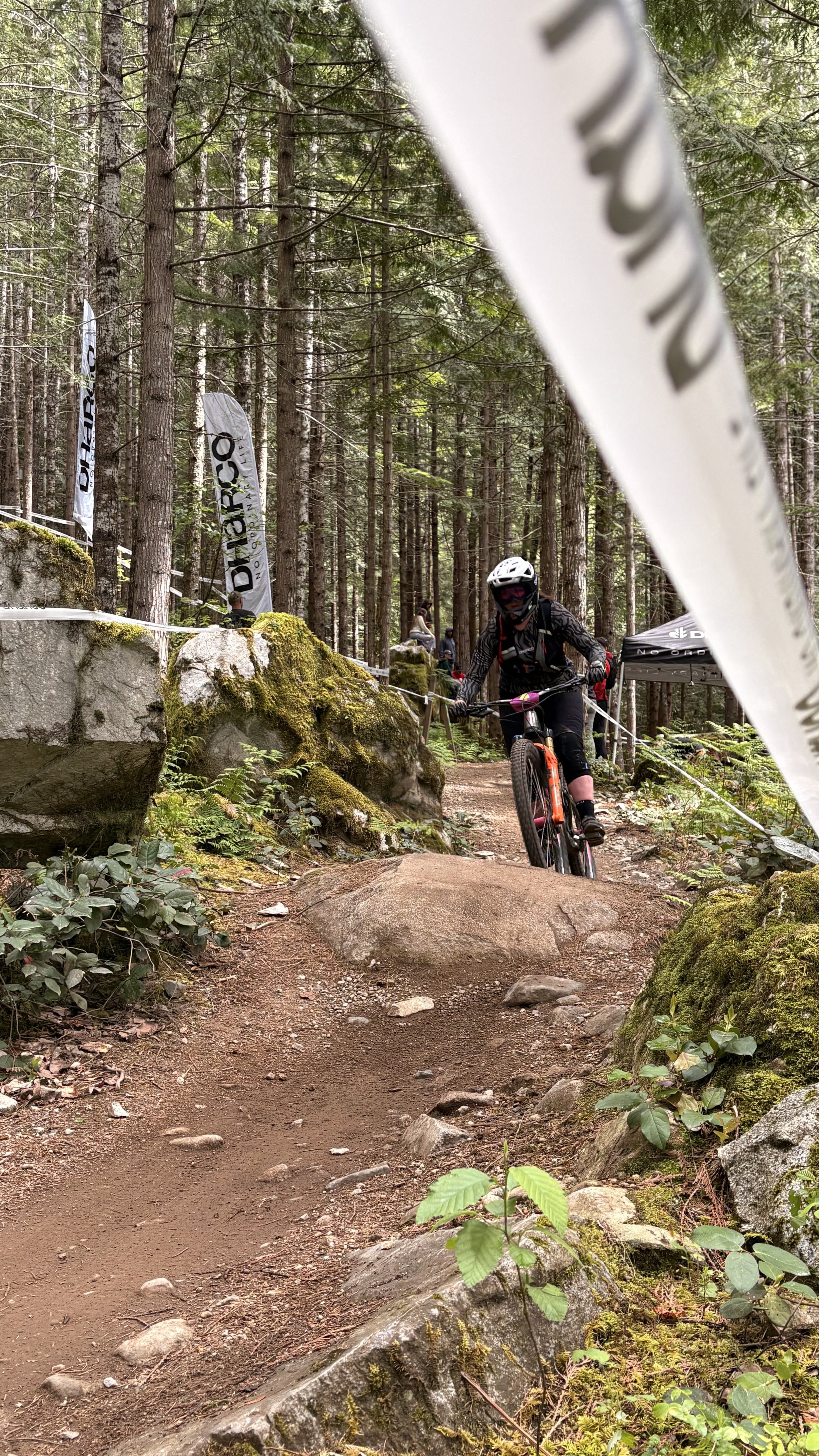
The Enduro Reality: Solitude and The Climb This practice chaos is exactly why so many women lean toward Enduro racing, and I completely understand the appeal. Enduro gives you breathing room. You do not have spectators lining the entire track watching your every move like you do in Downhill. You might have one technical section with a crowd cheering you on, but the rest of the stage feels like a solo ride in the woods. It is a much purer you versus you mentality.
But Enduro comes with its own unique brand of chaos. The first is navigation. If you do not know the trail system perfectly, you are at the mercy of the course tape. At a lot of smaller local races, the tape is not clearly marked. Last year, I hit a course divide where the marking was completely ambiguous. I went right, realized I was off the track, and had to jump off my bike to run back and turn the other direction. You also have to figure out exactly where a stage starts and stops, sometimes frantically scrambling to physically tap a timing chip on your wrist to an electronic box while gasping for air.
The second, and most overlooked, piece of Enduro is the climbing transfer. I am definitely not telling you to avoid Enduro, but I am giving you the reality of why I personally do not lean toward it. It rarely gets talked about, but your climbing fitness has to be incredibly high. You get all your points on the descent, but you are still racing the clock on the uphill. If you do not make it to the top fast enough to finish the race within the overall five or seven hour time limit, you are out.
I always wear a Garmin watch, and I use it to time my practice laps. There have been multiple times where I felt totally dialed for the downhill, but my watch told me I was not going to make the climbs fast enough to finish the race. Because I do not live for the climb, I often find myself redlining these transfer stages just trying to beat the clock.
It is incredibly frustrating to have advanced descending skills but realize your climbing pace might force you into a beginner category or make you pull out of an Enduro altogether.
You can absolutely change this with training. You can do the uphill intervals and build that engine. But you also have to remember why you ride. For me, mountain biking is about enjoyment, not just winning a title. Grinding intervals all week is not my version of enjoying the sport. If it is yours, that is amazing, and Enduro might be your perfect format. But if you are not big into climbing, just go in with your eyes open: in Enduro, you still have to climb fast enough to keep up with the pack.
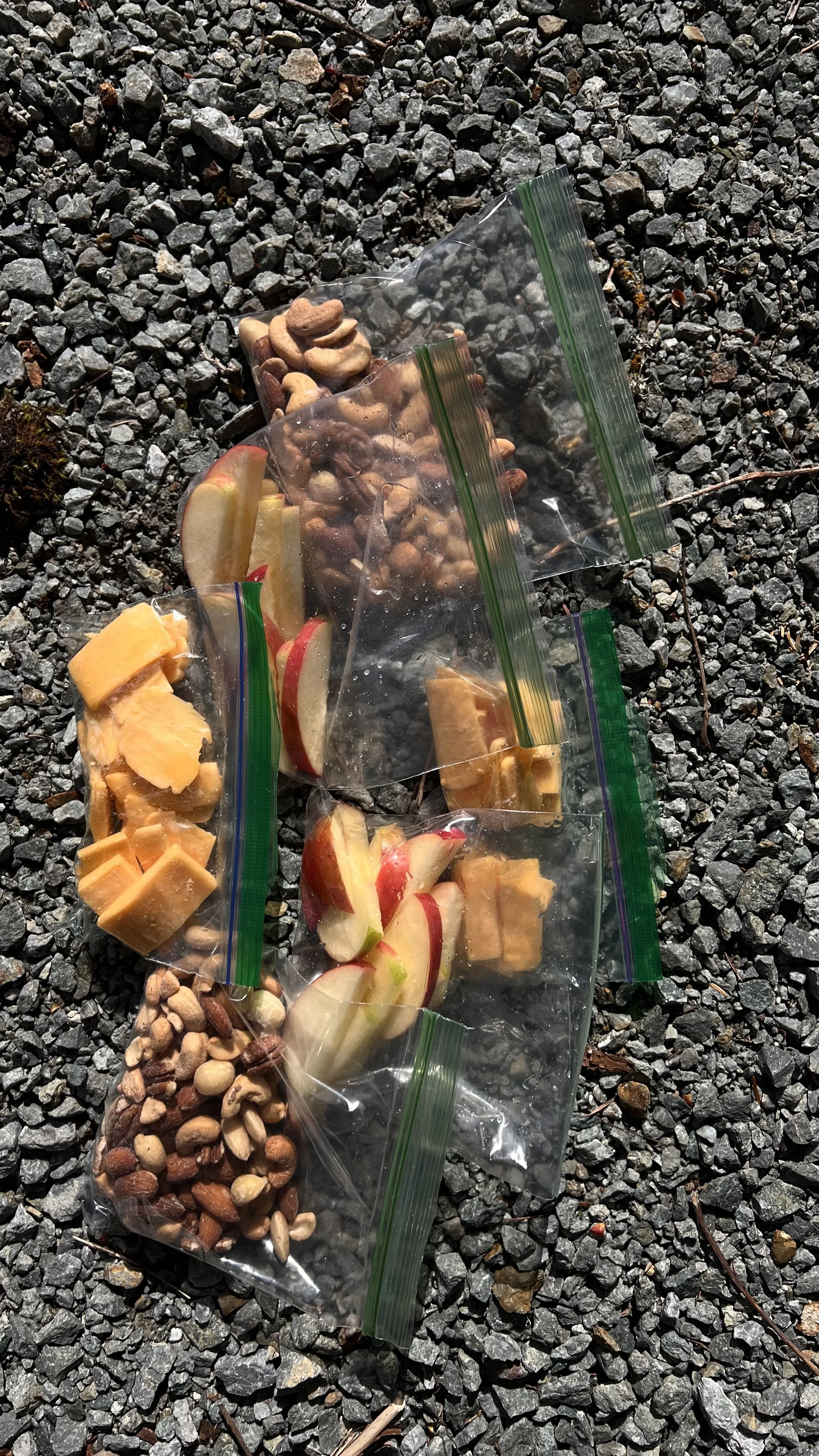
Fueling, Hydration, and the Backpack Reality A lot of people overlook the physical toll of Downhill racing. They see the shuttle or the chairlift and assume it is not a real workout because you are not pedaling. That is entirely false. Wrestling a heavy bike through rock gardens requires massive isometric muscle contractions and spikes your heart rate to the absolute limit.
You have to fuel for Downhill, but it is tricky because of the adrenaline. Scientifically, adrenaline triggers your fight or flight response, which routes blood away from your digestive system and completely suppresses your appetite. You will not feel hungry, but you still need to eat. A great tactic is to stash a water bottle and some familiar snacks behind a rock near the start gate. I have been at scorching hot Downhill races where the water stations were completely empty. If you get caught out and dehydrated during practice, that deficit will follow you all weekend. Honestly, your body might feel the lingering effects of that dehydration for a while.
For Enduro, the stakes are even higher. Do not ever put yourself at the mercy of a feed station. Even if the race organizer promises full water jugs, do not rely on them for a five hour race. My husband Spencer raced the Enduro World Series 100, a literal world level event, and they ran out of water. Riders were desperately begging strangers for a sip from their hydration packs. Do not ditch your backpack just to look cool. If the feed station is empty, you will instantly regret prioritizing aesthetics over survival.
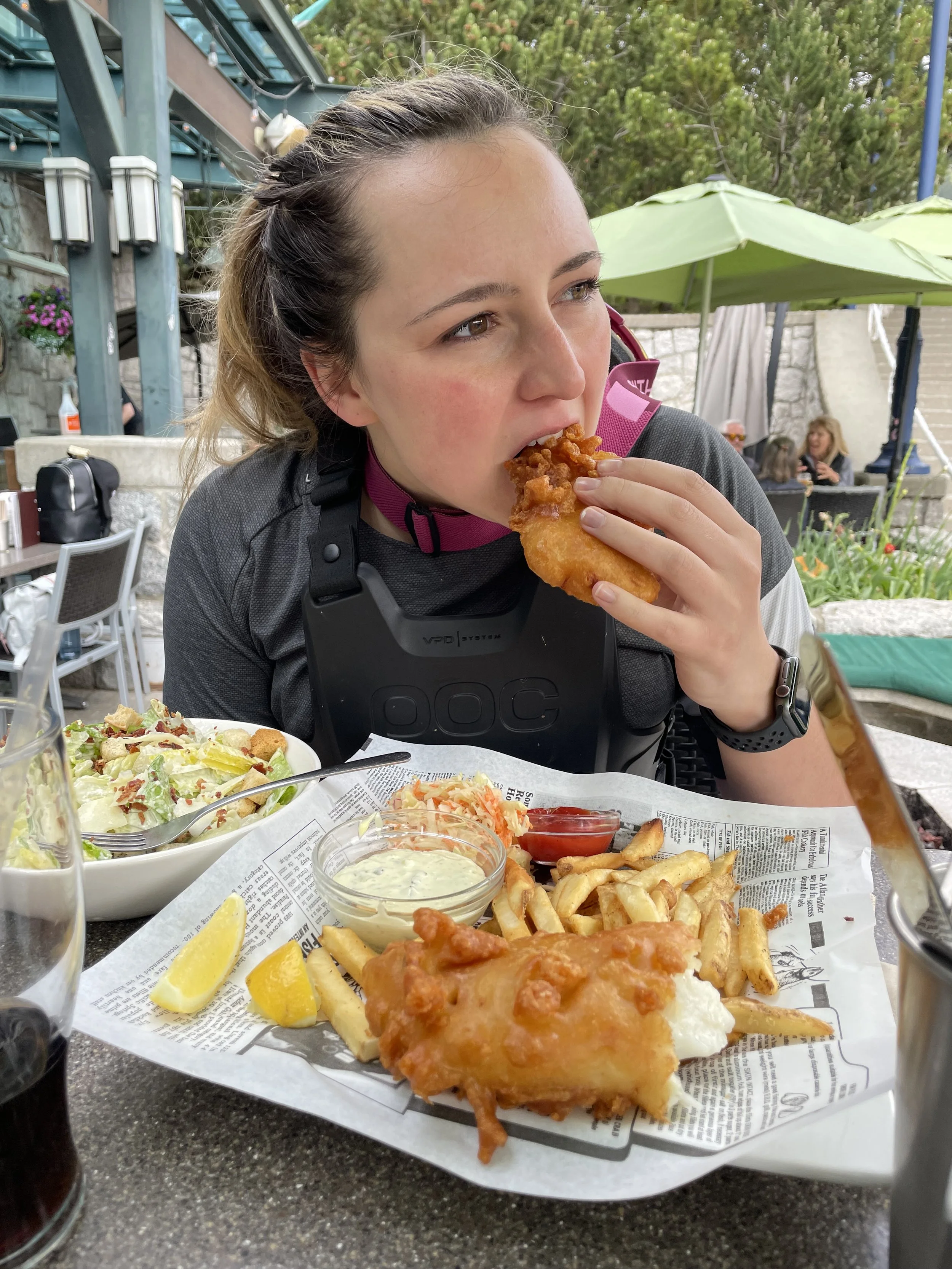
Gut Training and The Bonk This brings me to gut training. You have to know exactly how your body reacts to the food in your pack. Enduro feed stations often have a fun, festive vibe. They might offer you a cupcake, a slice of bacon, or even a mid race margarita. If you are doing a casual one hour race in a beginner category, you might get away with it. But if you are out there for five hours and you eat something your gut is not trained to process, it will completely destroy your next climbing transfer.
Stick to the food you know, even if it gets boring. Set a timer on your Garmin to remind yourself to eat frequently. If you forget to eat, you will bonk. Bonking is not just feeling tired; it is a physiological crash where your body completely depletes its glycogen stores. Once you bonk, your muscles literally run out of fuel, your brain gets foggy, and you cannot simply eat a gel and bounce back. It is game over for your pace.
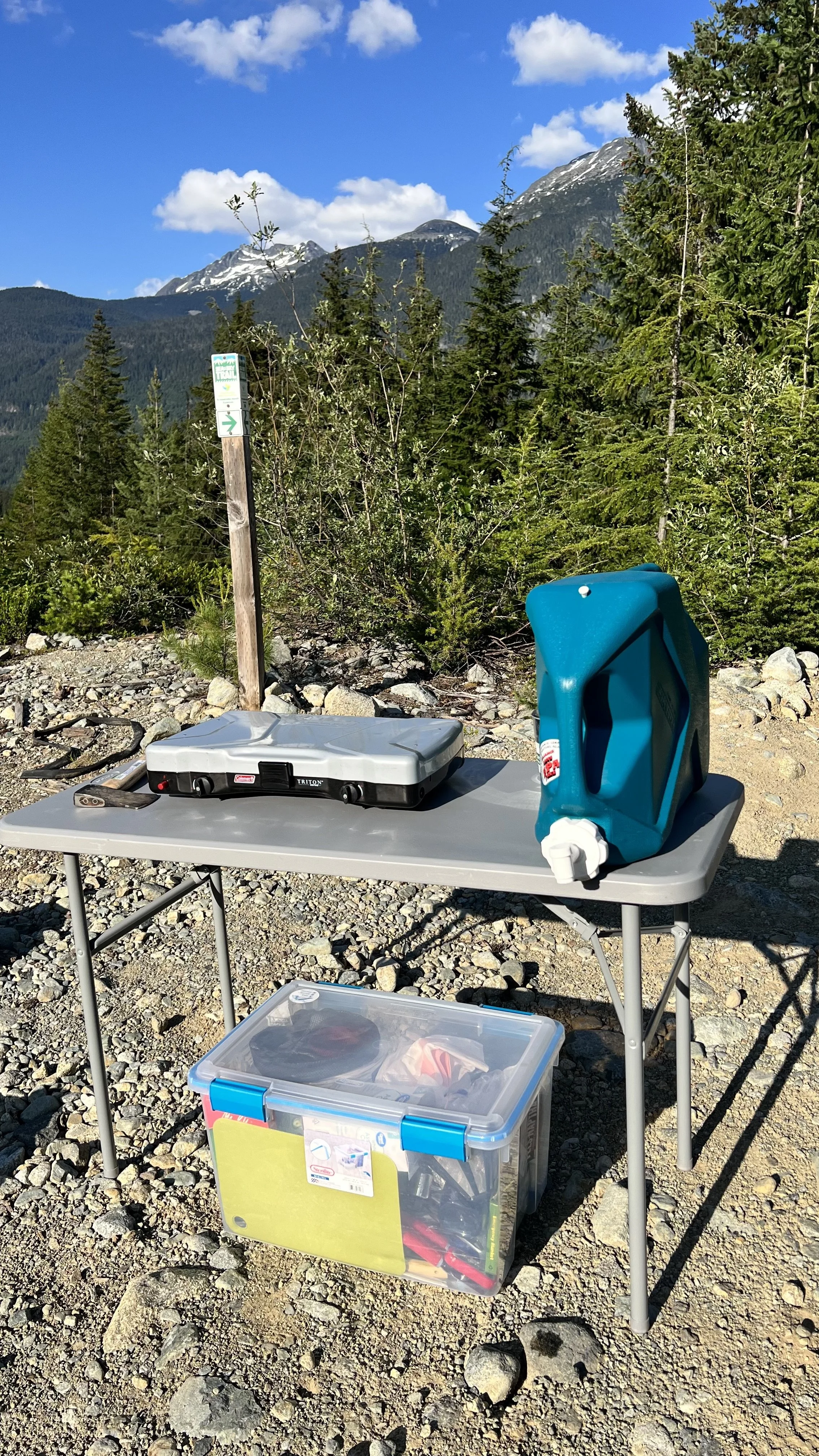
The Enduro Survival Kit Finally, you need a mechanical survival kit. In Enduro, if your bike breaks and you cannot fix it, your race is over. At an absolute minimum, your pack should have a mini hand pump. Some people attach these directly to their frames, but you run the risk of losing them on a rough descent, so keeping it in your pack is much safer. You also need tire levers, a tubeless tire repair kit with plugs, and a spare inner tube for when a sidewall tear is too big to plug. Wrap a few layers of Gorilla tape around that hand pump so you do not have to carry a whole roll. Throw in a handful of zip ties because they weigh absolutely nothing and can fix almost anything.
You need a multi tool that specifically includes a chain breaker, along with spare chain links. Some racers also carry a spare derailleur hanger for their specific bike frame. I have not personally done this, but it makes perfect sense. If you smash that hanger on a rock, it is nearly impossible to shift gears or climb, and you usually cannot borrow one from someone else. While there is usually medical staff somewhere on the course, carrying a basic first aid kit is always a smart move. Bring your own supplies. If you happen to not need them, great. But if you do not have them, you will regret it.
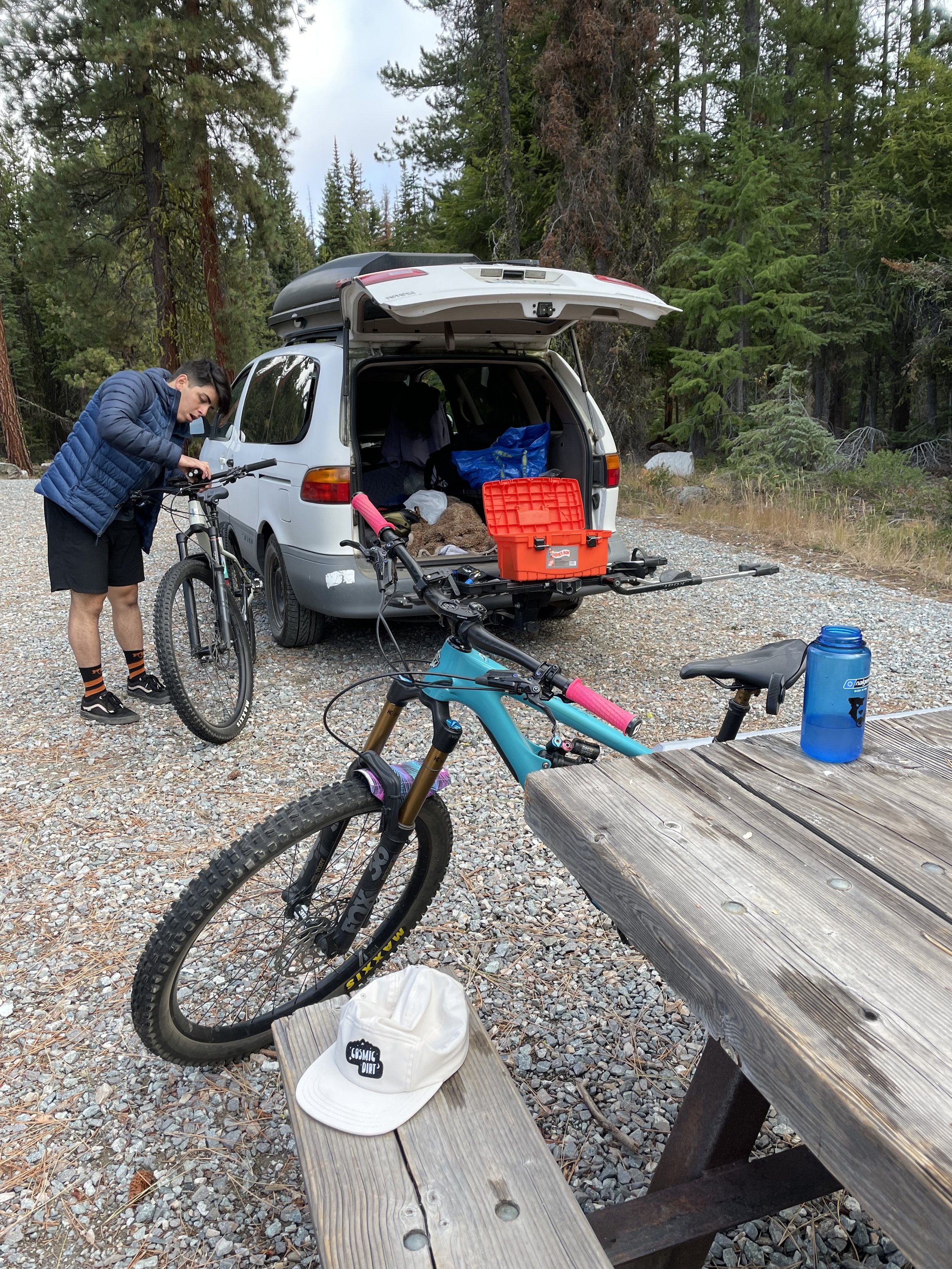
The Downhill Pit Box and Being Your Own Mechanic While Enduro requires you to carry your survival kit on your back, Downhill racing requires a completely different level of mechanical preparation back at your car. Sometimes you get lucky. At the Northwest Cup, Fanatik Bike Shop was there turning wrenches and selling replacement parts. But you can never rely on a shop showing up to save your weekend. If you want to race Downhill, now is the time to learn how to be your own mechanic.
If you cannot fix your bike, you are not racing. It is truly that simple. Spencer is usually the one who packs our race day toolbox, but over the years, we have learned exactly what needs to be in the vehicle. You need to bring every tool you can think of, plus a dedicated box of spare parts. Downhill is incredibly violent on your equipment, and things will inevitably break during practice.
Here is what you need in your pit box to ensure you actually make it to your race run:
Extra brake pads. Bring a lot of them, especially if the weather turns wet and muddy.
Spare brake levers. These snap in crashes, and riding without a front brake is not an option.
A spare rear derailleur and derailleur hangers.
Extra chains and master links.
Spare handlebars and grips.
Extra tires with heavy casings.
Spare shift cables.
Extra brake rotors.
If a massive rock garden completely destroys your rear derailleur during your first practice lap, having that spare means you are still in the race. If you do not have it, your weekend is over.
You need to know how to work on your own bike, but you do not have to be a master mechanic right out of the gate. If you are staring at a broken part and feeling completely lost, YouTube is your best friend. There is absolutely no shame in sitting in the dirt with your phone out, watching a video tutorial on how to swap a shift cable or replace your brake pads before your race run.
While this pit box mentality is absolutely mandatory for Downhill, it is just as important for Enduro practice. Yes, if a catastrophic failure happens during an Enduro race stage and you cannot fix it with your backpack tools, you are out. But if you blow up a derailleur or snap a brake lever during an Enduro practice lap, having those exact same spare parts waiting for you back at the car means you can salvage the weekend and still race the next day.
Do not bank on running into town to buy a replacement part. Not all race venues have local bike shops nearby, and even the ones that do are usually completely slammed with desperate riders during a race weekend. They will almost certainly not have same day turnaround. Bring your own spares, be your own mechanic, and save your own race.
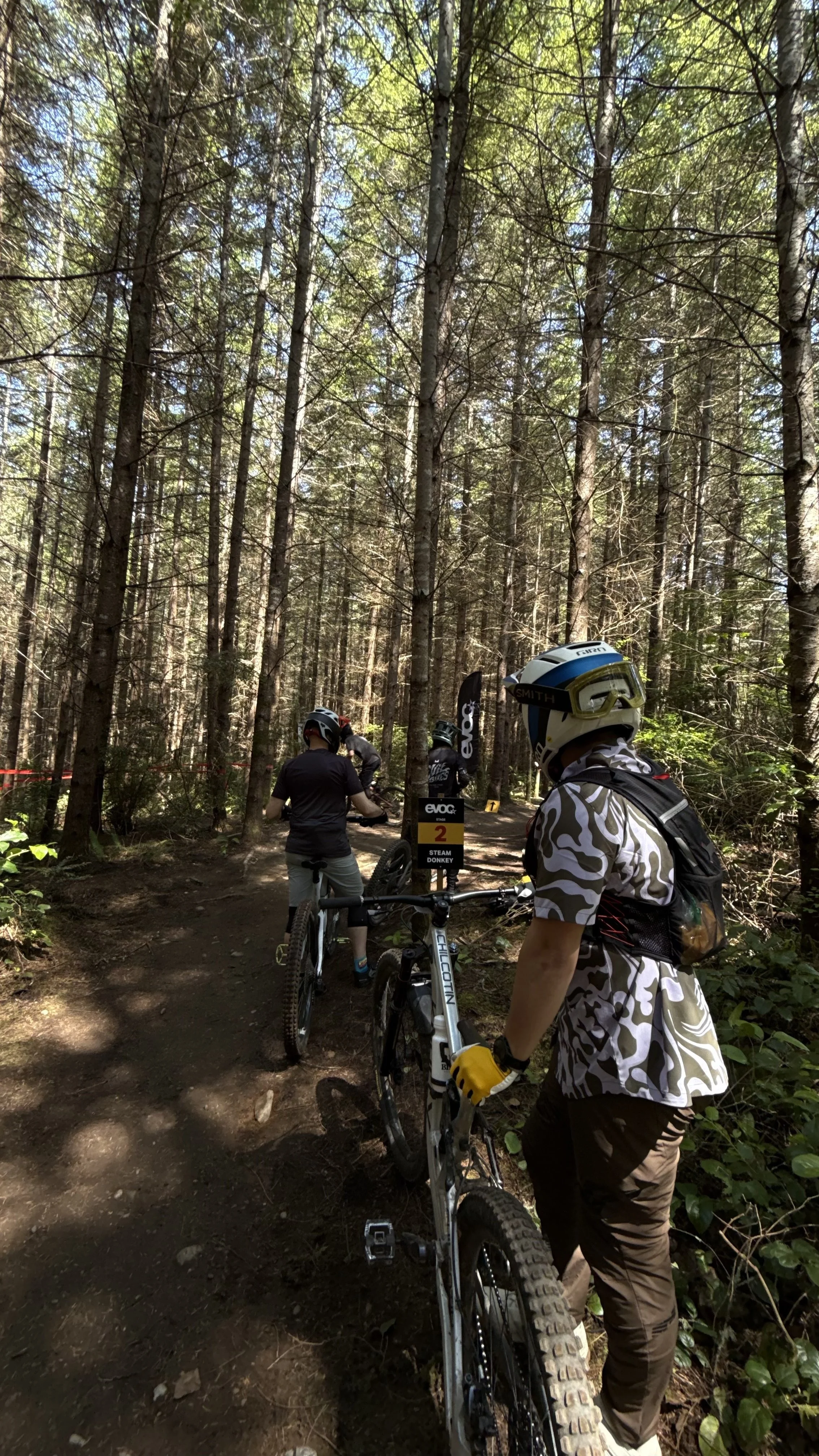
The Start Line Sickness and The Mind Games Nothing will prepare you for how heavy the air feels at the start line. During practice, the weekend feels full of energy and courage. But the second people are standing in line waiting for their drop time, you can cut the nervous tension with a knife.
This is the most dangerous time to listen to other people. The higher the category you race, the more psychological games people play. They will ask if your tire pressure is too soft, or make an offhand comment about your suspension setup just to plant a seed of doubt. Check your setup before practice, trust your own mechanics, and shut the noise out.
Sometimes, the worst mind games come from your own brain. Last season, I entered the Northwest Cup at Port Angeles. I had just purchased a new to me downhill bike, and I decided to move up from Cat 3 to Cat 2. In hindsight, I should have stayed in Cat 3 so I was not in the deep end with a new course and a totally foreign bike setup. Between the spectators, the local kids who knew the track like the back of their hands, and a bike I did not implicitly trust to corner or brake properly, my brain spun out. Nobody had to say a word to psych me out; the uncertainty did it for me. I felt mentally defeated before I even started, and I ultimately chose to walk away from the race. It was a hard lesson: never race a setup you do not know intimately.
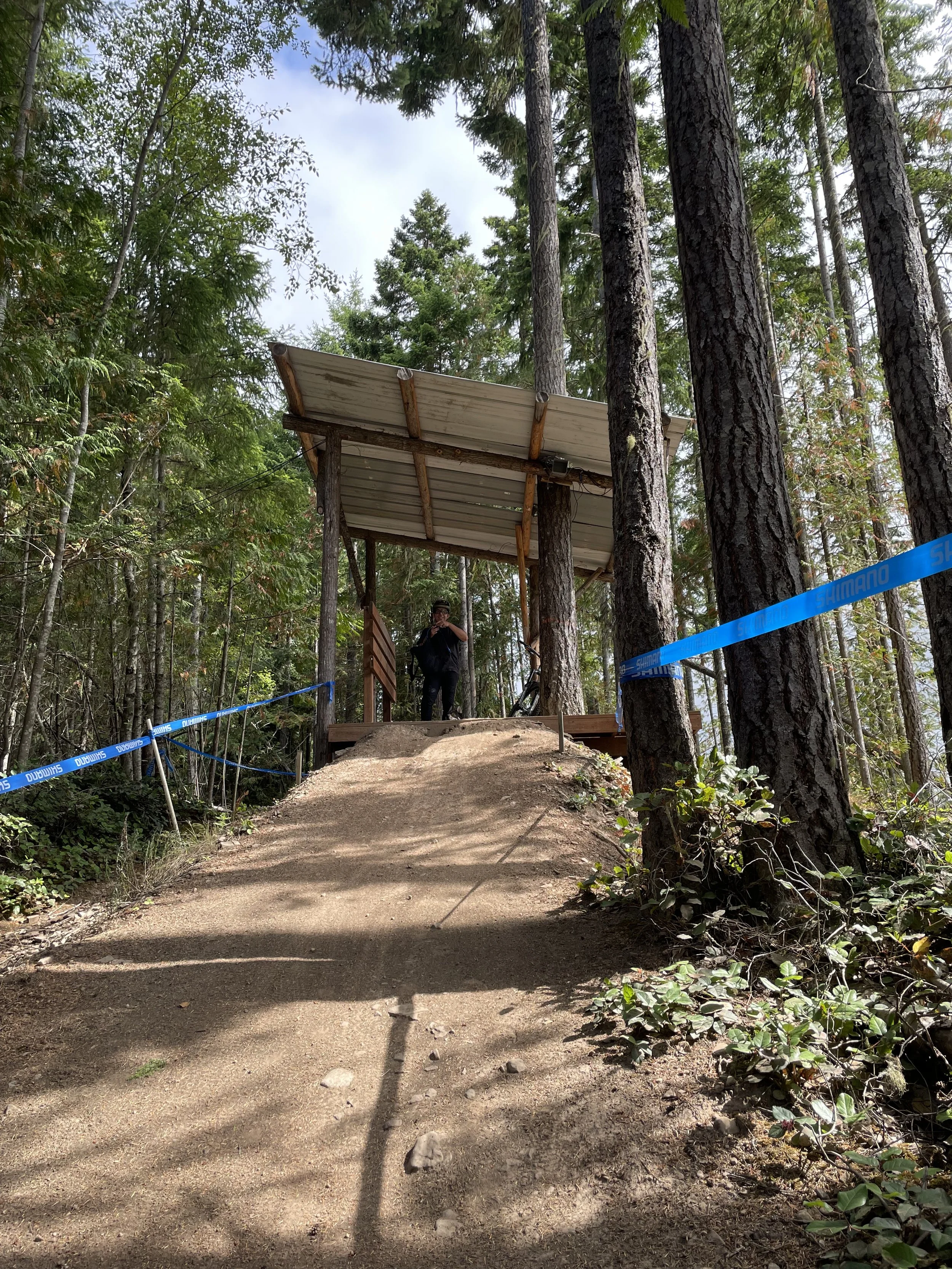
Controlling the Controllables When you are on the start plate and the beeps are counting down, the only thing you can do is control your internal narrative.
If the nerves get too loud, you need cognitive redirection. Find your song. It has to be highly personal to you, something that makes you feel powerful, something uplifting, or just an earworm that is literally louder than your own anxious inner voice. Sing it on repeat to shut down the negative self talk so your body can run on pure muscle memory.
You cannot control the results, but you can control your breathing and your focus. Pick one or two specific things on the track to execute perfectly. Tell yourself to keep your eyes forward and look through the exit of the turns. Focus on riding with a strong, heavy body position in the corners. Give yourself permission to slow down on the tech section that freaks you out so you stay in control, and then smash the pedals somewhere else.
Here is the biggest secret in racing: a lot of times, the massive time gains are not made in the technical rock gardens. They are made by carrying consistent speed through the fast sections.
Breathe. Trust your bike. You’ve got this.