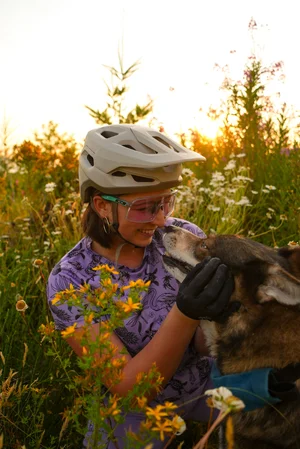
How to Find Your People in a New Riding Scene
Moving somewhere new is hard. I've done it multiple times, and every time I think it will be easier, but it never is. When you add mountain biking into the equation, it gets infinitely more complicated. You aren't just trying to find friends; you are trying to find people who ride the way you ride, who match your pace, and who respect your vibe on the trail.
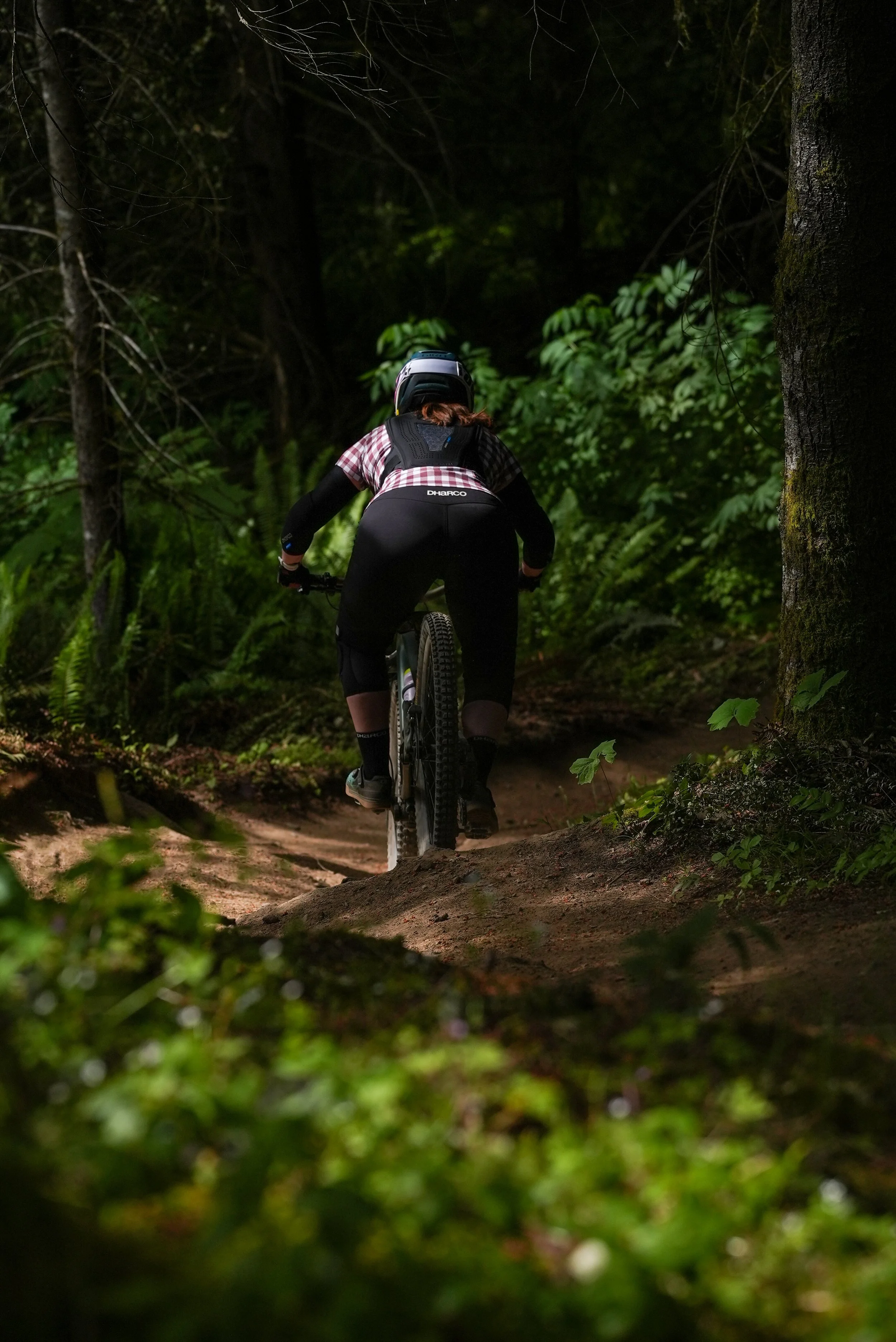
Spencer and I moved to Bellingham just before COVID hit. What was supposed to be a fresh start became the most extreme test of how to make connections during a time when people were even more closed off. Whatever ideas we had about getting out and meeting the local riding community got shelved immediately. We obviously didn't try to make connections during the peak of the pandemic, so for a long time, it was just us.
When things finally started to subside and open back up, we were in a bizarre position: we had lived in this town for a couple of years, but we didn't actually know anyone deeply. We recognized a few friendly faces, but we had no real crew. Breaking into the scene after that was slow. Way slower than I expected.
If you are showing up to trailheads right now and feeling like an outsider, it is incredibly easy to think you are doing something wrong. But the reality is that making friends as an adult is a math equation. Research shows it takes roughly fifty hours of shared, face-to-face time to go from being strangers to casual friends, and over two hundred hours to build a close friendship. That isn't background time; that is actual, engaged time. So, if you feel like nobody really knows you yet, it might just be the timeline. It isn't a flaw in your personality.
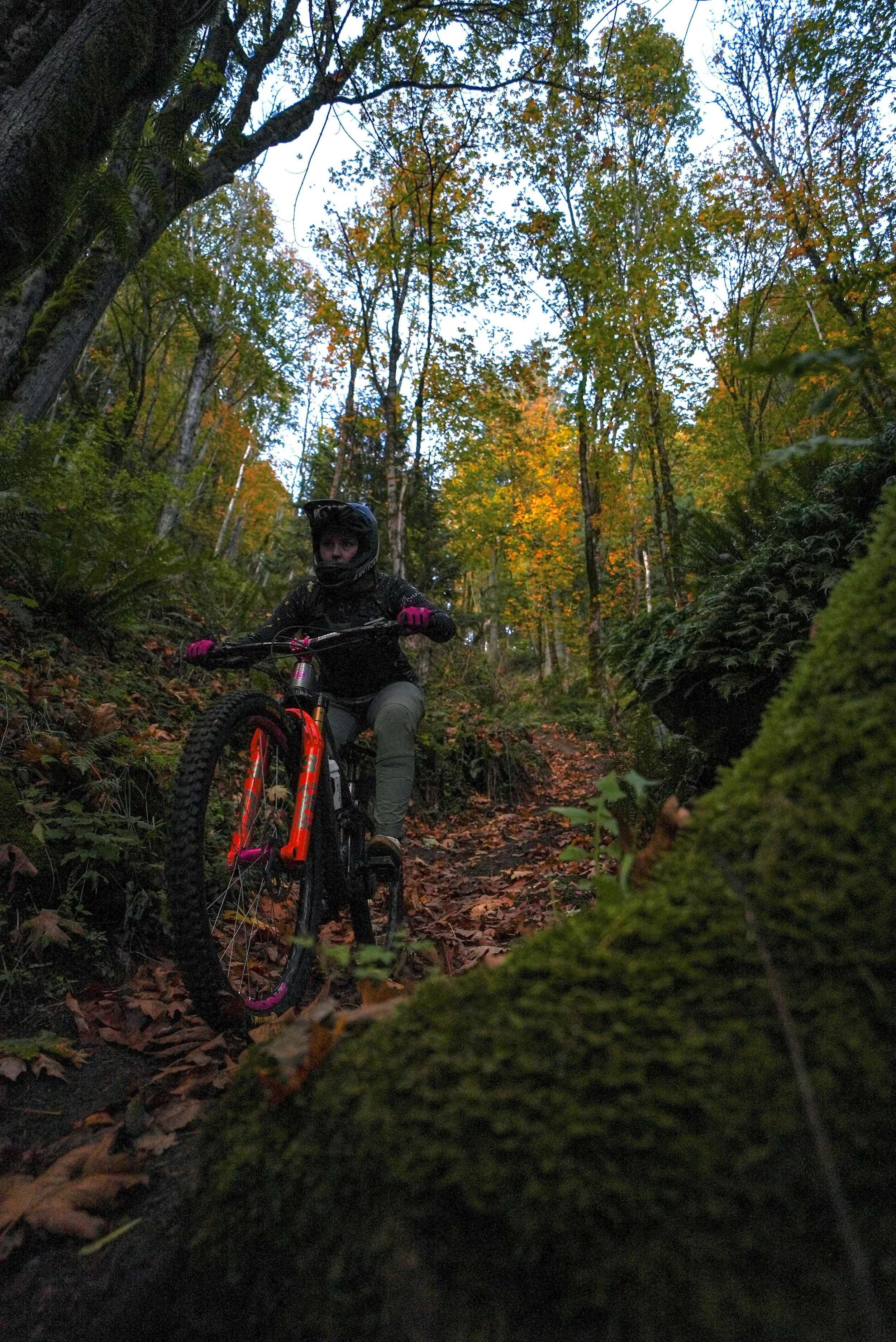
So, how do you actually get those hours in a new riding scene?
You just keep showing up. Psychologists call it the "mere exposure effect." Robert Zajonc's research demonstrated that simply being repeatedly exposed to someone is enough to increase how much you like them. This is the secret weapon of group rides and trail maintenance days. You don't need to be the loudest, most outgoing person in the parking lot. By putting yourself around the same people repeatedly, your brain and their brains are doing the heavy lifting. But eventually, you still have to open your mouth. A lot of riders show up, ride silently, and leave. Just asking someone about their line choice or the trail conditions is enough to bridge the gap between a familiar face and an actual conversation.
But there is a catch: when you are hungry for connection, it is dangerously easy to lower your standards.
If you keep showing up to a specific group ride or a local spot and it just isn't clicking, it is okay to walk away. You can find a space, put in the time, and realize it just isn't where your community lives. Recognizing that early saves you a massive amount of energy.
Sometimes, when you try to build community, it fails. I learned through my own trial and error that sometimes you accidentally let in "takers," people who only engage when it benefits them. Or sometimes you create groups with people who push you past your risk tolerance on the bike. And sometimes, it's just that you don't mesh well.
And none of that is your fault.
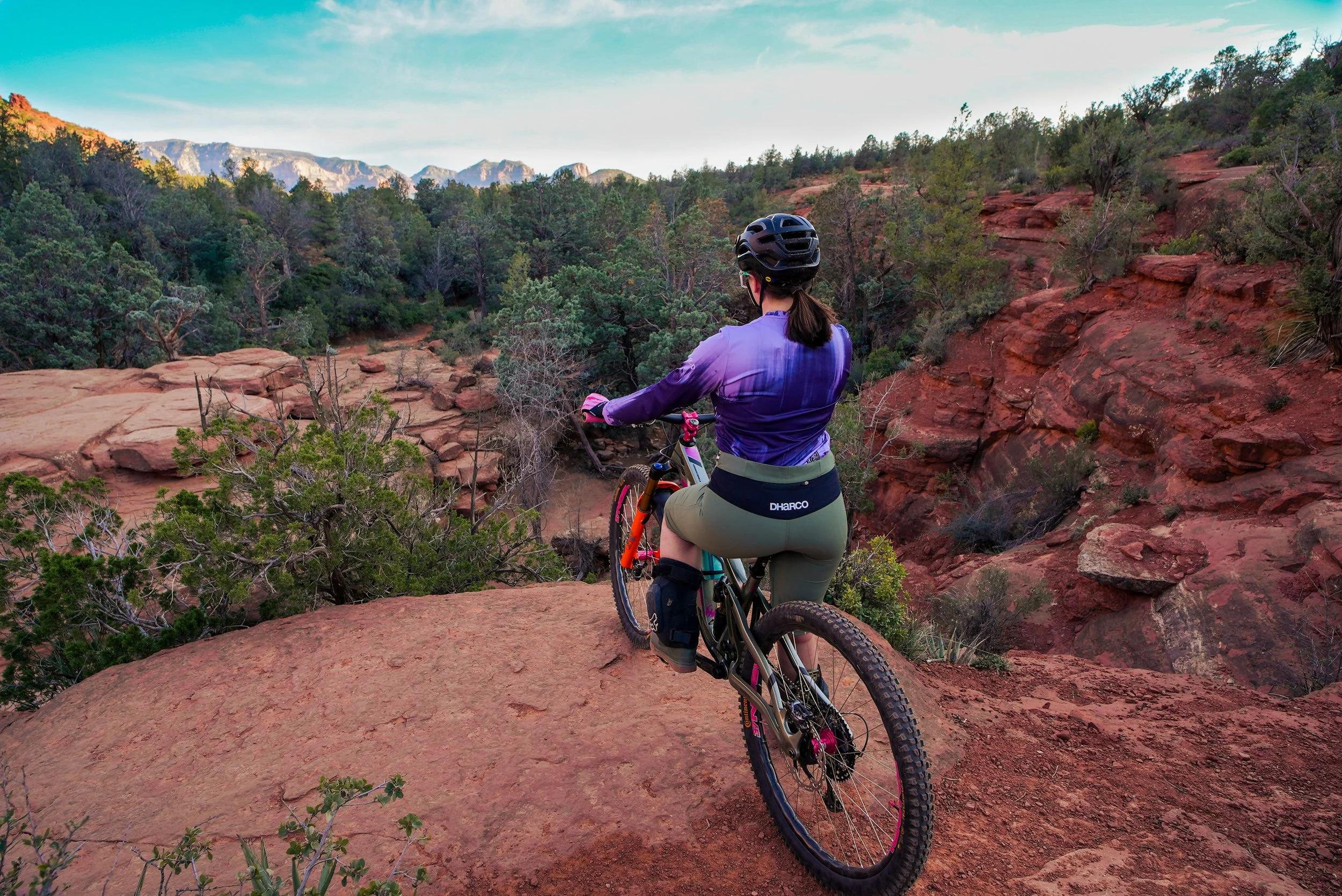
The right people feel completely different. They are calm and consistent. You should never feel like you are auditioning for their attention on the climb. Listen to your gut about people the exact same way you would listen to it when looking at a sketchy feature on the trail. If something feels off, pay attention.
Finally, you have to factor in the rhythm of where you live. Every region speaks a different language. I grew up in California, where the energy is warm and immediate. In the Pacific Northwest, people tend to take much longer to open up. Researchers at the University of Washington actually found that just believing in phenomena like the "Seattle Freeze" makes people behave more guardedly toward newcomers because they expect to be kept at arm's length. If you are coming from an expressive place and people aren't matching your energy, it might just be that they need more time. Do not change who you are to fit a local mold; just understand that the timeline might look different depending on where you landed.
I have been in Bellingham for years now, and I am still meeting people. The idea that you move somewhere, instantly find your crew, and that's it, it's a myth. It just keeps going. If you are in the early part of it and it feels lonely or slow, I get it. I have been there. Keep riding, keep your standards high, and keep showing up. The people will come.